
Reviewed · PRIVATE TOURS IN SALALAH
East Salalah Private Tour by VisitSalalah
Salalah turns green in surprising places. I like the private vehicle for up to seven people and the mix of springs, mountain views, old Dhofari homes, waterfalls, and ancient frankincense sites. I also like that guide Mohammed is praised for sharing local insight and keeping the day easygoing. The main caution is timing: five hours is tight for the number of stops described.
This is a good choice if you want a broad look at eastern Salalah without joining a large group. The route is especially appealing during Khareef, when Wadi Darbat can fill with lakes and waterfalls, but some stops may feel brief outside the monsoon season. Confirm the exact route before setting out, since the description includes several places that are not listed as formal stops.
In This Review
- Key points to know before booking
- Why this eastern Salalah route works
- Starting in Taqah with old Dhofari homes
- Taqah View Point and the coastal turn
- Wadi Darbat in and out of Khareef
- Jabal Samhan and the high mountain view
- Gravity Hill, where the road creates a puzzle
- The frankincense story near Khor Rori
- What the guide adds to the day
- Is $230 good value for your group?
- Who will enjoy this tour most?
- Practical timing and cancellation advice
- Should you book East Salalah Private Tour?
- FAQ
- How long is the East Salalah Private Tour?
- What time does the tour start?
- How many people can join the private tour?
- What is included in the price?
- Are entrance tickets included?
- Which places are listed as stops?
- Is Sumhuram included?
- What is the cancellation policy?
Key points to know before booking
- Private touring for up to seven: You get your own air-conditioned vehicle rather than sharing the day with a busload of people.
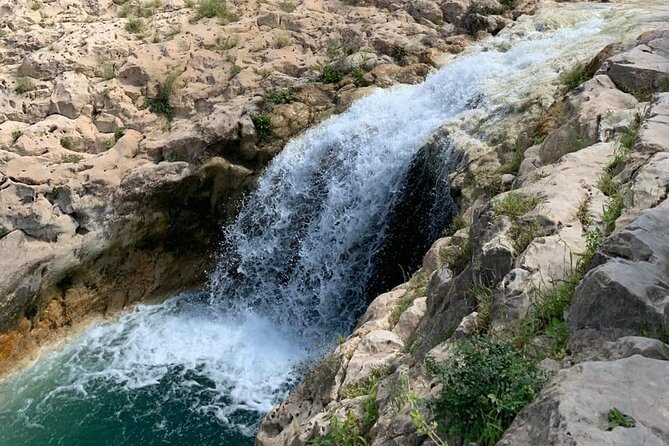
- Wadi Darbat is the star attraction: Expect mountains, caves, camels, lakes, and seasonal waterfalls that can reach about 30 meters during Khareef.
- A strong mix of nature and culture: Taqah brings together a heritage house, castle options, a viewpoint, and old Dhofari traditions.
- Mohammed earns repeated praise: His warm manner, local information, and ability to adjust the day are the clearest strengths in the feedback.
- The schedule needs careful handling: Five hours for five one-hour stops is ambitious, especially if you want time for photographs or a museum visit.
- The $230 price is per group: It becomes better value when divided among several people, particularly a group of four to seven.
Why this eastern Salalah route works
Salalah can seem like two different places. Along the coast and around the city, you find palms, plantations, and settlements. Inland, the Dhofar mountains rise quickly, with springs and seasonal streams creating pockets of green. This tour links those settings in one compact outing.
The eastern route also gives you more than pretty scenery. Taqah offers a look at local domestic architecture and fortifications. Wadi Darbat shows how water shapes the Dhofar hills. Khor Rori and Sumhuram connect the area to the old frankincense trade, one of the main reasons this part of Oman has international heritage status.
I like that range. You are not spending five hours stopping at five similar viewpoints. You move from culture to coast, then into the mountains and back toward an ancient trading site.
The private format matters here. A public excursion often has to follow a fixed rhythm, but a private guide can spend more time at the place you care about most. If the waterfalls are running, you may want longer at Wadi Darbat. If old architecture interests you, you may prefer Taqah Castle or the Koofan Heritage House.
More Private Tours in Salalah
- Mountain Safari Private Tour
★ 5.0 · 105 reviews - Sunset desert safari tour in Salalah(private tour)
★ 5.0 · 58 reviews - Private Guided Tour to West Beaches of Salalah
★ 5.0 · 50 reviews
Starting in Taqah with old Dhofari homes
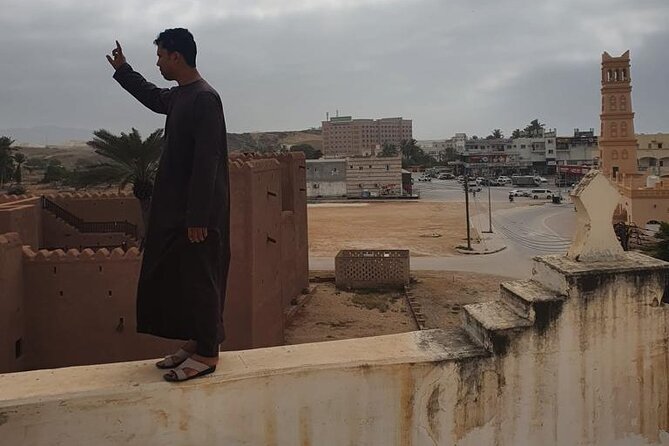
The first part of the route centers on Taqah, a coastal town east of Salalah. You can choose among the Koofan Heritage Lodge, Taqah Castle, and Borgel Asker, with about an hour allocated to this part of the visit.
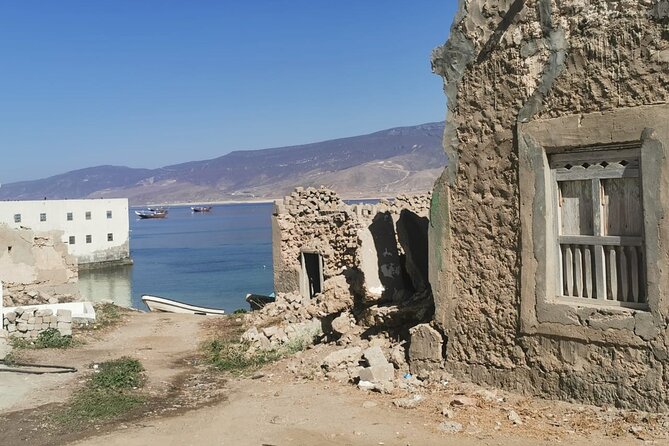
The Koofan site is described as a roughly 150-year-old Dhofari house. That detail gives the stop real value. Instead of seeing only a restored monument, you get a sense of the type of home tied to local life before modern construction changed the region. Look for the building details and ask Mohammed how the house was used.
Taqah Castle provides a different angle. It is a defensive and civic reminder of the town’s past, while the heritage house focuses more on daily life. Borgel Asker adds another possible stop, but the available information does not explain exactly what you will see there.
That makes the choice important. With only about five hours for the entire outing, you probably will not want to linger at all three. I would ask the guide at the start which site is open, which one best matches your interests, and how much time remains for Wadi Darbat.
Admission is listed as free at these stops. That helps keep the cost focused on transport and guiding rather than entrance fees.
Taqah View Point and the coastal turn
The Taqah View Point gives you a wider look at the town and surrounding coast. It is scheduled for about an hour, which is generous for a viewpoint unless the stop includes extra time for photographs or a slower explanation of the area.
I like having this pause after the heritage visit. Buildings tell you how people lived, while the viewpoint helps you understand where Taqah sits within the wider Dhofar region. The combination gives the route a better sense of place than a quick drive past town.
The practical issue is that the time allocation appears flexible rather than precise. If you stop for only a short look, that saved time could help later at Wadi Darbat or Sumhuram. If the weather is clear, you may want to stay longer. During Khareef, mist and rain can change what you see from high ground, so ask the guide how conditions are affecting the view.
Wadi Darbat in and out of Khareef
Wadi Darbat is the strongest nature stop on the route. The valley lies in the mountains near Khor Rori, beyond the Taqah coast, and is described as a natural park with lakes, caves, mountains, camels, green plant life, and waterfalls.
The season makes a big difference. During Khareef, the southwest monsoon feeds the valley with mountain water. Waterfalls can pour from heights of about 30 meters, and pools or lakes can form below. The result is one of Salalah’s most unusual sights: a normally dry corner of southern Arabia can turn into a wet, green valley.
Outside Khareef, the experience may be calmer. You might still find mountain scenery, caves, camels, and pockets of plant life, but you should not assume the waterfalls will be flowing. This is one place where the month of your visit matters more than the brochure language.
A large picnic area is available, which gives the stop a relaxed feel. Still, the tour includes bottled water but does not include food, so bring anything you want to eat. Your own expenses are not covered, and the information provided does not promise a meal.
One hour is enough for a look around, a few photographs, and a short walk if conditions allow. It is not much time for a long exploration of the valley. I would tell the guide if Wadi Darbat is your main reason for booking, since the private format may make it possible to give this stop priority.
You should also expect an active outdoor setting rather than a polished attraction. Ground conditions can vary, especially during the wet season. Wear shoes that can handle uneven or damp ground, although the tour details do not specify a required dress code or walking distance.
A different way to spend the day out of Salalah:
- East Salalah Mountain Safari, Wadi Darbat, Beach, Camels, Dunes
★ 5.0 · 206 reviews - Sunset Desert Safari Salalah Tour in Rub Al Khali – Empty Quarter
★ 5.0 · 91 reviews - Salalah: Sunset Desert Safari – Rub Al Khali – Empty Quarter
★ 4.6 · 79 reviews - West Salalah Tour – Caribbean of Orient – Fazayah Beach with City
★ 5.0 · 74 reviews
Jabal Samhan and the high mountain view
Jabal Samhan, also written as Jabal Shamhan, brings the route higher into the Dhofar mountains. The stop is scheduled for about an hour and is free to enter.
The appeal here is the change in scale. Wadi Darbat puts you among water, trees, and animals. Jabal Samhan gives you a broad mountain outlook and a sense of how sharply the terrain rises above the coastal plain. You can use this stop to understand why water collects in the valleys below during Khareef.
The information does not specify a particular lookout structure, trail, or facility at the mountain stop. That means you should think of it mainly as a scenic pause, not a full hiking excursion. If you want a longer walk, ask before the vehicle leaves Salalah.
Weather can also affect the view. Mist is part of the Khareef season, and high points may be cloudy when the coast is clearer. That is not necessarily a wasted visit, but it does make the timing less predictable.
Gravity Hill, where the road creates a puzzle
The final listed stop is Gravity Hill, also called Earth Gravity Controversial or Gravity Hill. It is another free stop, scheduled for about an hour.
The attraction comes from the apparent effect that a vehicle or object can move uphill when placed on a certain stretch of road. The name itself admits that the explanation is disputed. You can enjoy the odd sensation without treating it as a proven change in gravity.
This stop adds humor and variety to the outing. After castles, mountain views, and ancient ruins, a roadside optical or topographical puzzle gives you something different. It is also a reminder that not every stop needs to be grand to be memorable.
Still, an hour may be more than you need here. If the visit is brief, that time could be better used at Wadi Darbat or the archaeological area. Ask Mohammed how long the stop usually takes and whether the route can be adjusted.
The frankincense story near Khor Rori
The wider route description also includes Khor Rori Creek and the ruined city of Sumhuram. Sumhuram was an ancient center linked to the Arabian frankincense trade, and its archaeological park and museum form part of the UNESCO World Heritage Site known as the Land of Frankincense.
This is an important addition because it gives the scenery an economic and historical reason. Frankincense was not simply a local product. It moved through organized trade routes, and ports such as Khor Rori helped connect southern Arabia with markets beyond the region.
The archaeological park is not listed among the five formal stops, so you should confirm whether it is included on your chosen departure. That is one of the most useful questions to ask before booking. If you care about ancient sites, you do not want to assume Sumhuram is part of the five-hour plan and then discover that the day focuses only on the mountain route.
The same applies to Ain Razat, a collection of natural springs mentioned in the route description. Ain Razat is another notable nature stop, but it does not appear in the formal stop-by-stop schedule. Clarifying these details may prevent disappointment and help you decide which places deserve your limited time.
What the guide adds to the day
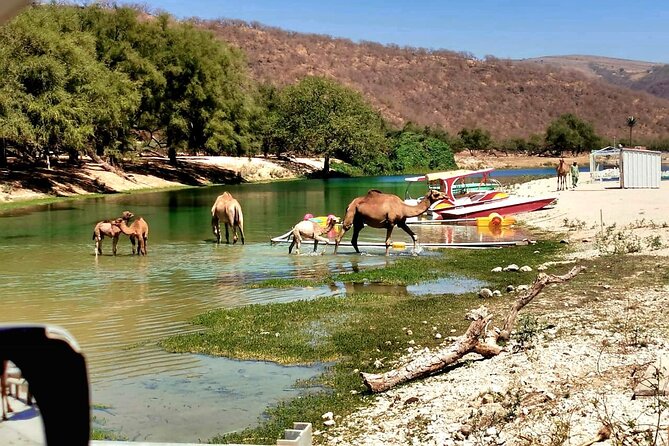
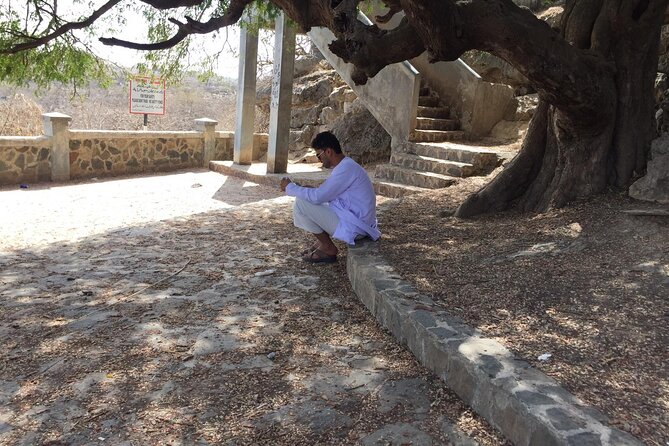
The strongest personal element is the guide. Mohammed is repeatedly singled out for being friendly, informative, and good at keeping the day moving without making it feel stiff. One account identifies the guide as Muhammed Rafit, so the provider may use more than one guide or spell the name differently.
The praise is consistent in the areas that matter most on a private tour. You want someone who can explain Oman and Dhofar in plain language, answer questions, and help the schedule run smoothly. You also want a guide who can respond when weather, road conditions, or your interests change the ideal order of stops.
I would use the private setting to ask questions. Ask about the old Dhofari house, the frankincense trade, the monsoon, local agriculture, and the reason Wadi Darbat changes so much through the year. The route passes through places that are more meaningful when someone connects them.
The guide is also the best person to resolve the itinerary uncertainty. Ask at pickup whether Ain Razat, Khor Rori, Sumhuram, and the museum are included, and how long you will spend at each site.
Is $230 good value for your group?
The price is $230 per group of up to seven, not $230 per person. That changes the calculation.
For seven people, the cost works out to about $33 per person. For four people, it is about $58 each. For two people, it is $115 each, which is a much bigger outlay for a five-hour outing.
The package includes a licensed guide, bottled water, and an air-conditioned vehicle. Those inclusions matter in Salalah, where you may move between warm coastal areas and cooler mountain roads. You are paying for private transport, local interpretation, and the freedom to keep the outing within your own group.
The value is strongest when you fill most of the vehicle and care about flexibility. It is less compelling for a couple who wants only one or two scenic stops, especially if the tour remains close to five hours and some sites are visited quickly.
Because your own expenses are not included, plan for any food, purchases, or paid admissions that may arise. The listed stops themselves show free admission, but the information does not promise that every possible museum or attraction on the wider route has no fee.
Who will enjoy this tour most?
I would recommend it for a small family, a group of friends, or anyone who wants a private introduction to eastern Salalah. It suits people who like combining nature, local buildings, viewpoints, and ancient sites rather than spending a full day on one activity.
It is also a good fit for visitors who want a guide rather than a self-drive day. Mohammed’s repeated praise suggests that the human side of the experience is a real strength.
You should be comfortable with a fairly active schedule and some time in outdoor settings. The tour information says most people can participate, but it does not give detailed accessibility information, walking distances, or vehicle specifications beyond air conditioning. Ask directly if you have mobility concerns.
This is less suitable if you want a slow picnic in Wadi Darbat, a long visit inside a museum, or a dedicated archaeological tour. The five-hour duration requires choices.
Practical timing and cancellation advice
Pickup begins at 8:00 am, and pickup is offered. The experience is private, so only your group participates. A mobile ticket is provided, and booking confirmation is received at the time of booking.
The stated duration is approximately five hours. Since the route describes five main stops, each assigned about an hour, the schedule leaves little room for traffic, photographs, longer walks, or an additional heritage site. Confirm the order and the actual stops when you book.
Free cancellation is available if you cancel at least 24 hours before the start time. Cancellations within 24 hours are not refunded, and changes made inside that window are not accepted. The cut-off follows local time in Salalah.
Should you book East Salalah Private Tour?
Book it if you want a compact, private overview of eastern Salalah and can gather several people to share the $230 cost. The best reasons are the range of scenery, the chance to see Wadi Darbat in Khareef, and the personal guidance associated with Mohammed.
Before paying, ask one clear question: exactly which places are included on your departure, especially Ain Razat, Khor Rori, Sumhuram Museum, and the archaeological park. If those sites matter to you, the answer may decide the booking.
I would also ask whether the schedule can give extra time to Wadi Darbat or Sumhuram instead of spending a full hour at Gravity Hill. With those points confirmed, this tour offers a useful and friendly way to see the eastern side of Salalah without giving up control of your day.
FAQ
How long is the East Salalah Private Tour?
The tour lasts approximately five hours.
What time does the tour start?
The stated start time is 8:00 am.
How many people can join the private tour?
The price covers one group of up to seven people.
What is included in the price?
The tour includes a licensed guide, bottled water, and an air-conditioned vehicle.
Are entrance tickets included?
The listed stops show free admission. Your own expenses are not included, and the information does not specify admission costs for every site mentioned in the wider route.
Which places are listed as stops?
The formal stops are Taqah, Taqah View Point, Wadi Darbat, Jabal Samhan, and Gravity Hill.
Is Sumhuram included?
Sumhuram and Khor Rori are described as part of the wider route, but they are not listed among the five formal stops. Confirm their inclusion before booking.
What is the cancellation policy?
You receive a full refund if you cancel at least 24 hours before the experience starts. Cancellations and changes made less than 24 hours before the start time are not accepted for a refund.
Newest Salalah trips added here
- West of Salalah private tour – fascinating mountains and beaches★ 5.0 · 9 reviews
- West Salalah Tour by VisitSalalah★ 5.0 · 6 reviews
- West Salalah Beaches and Blowholes★ 5.0 · 7 reviews
- Private tour – Empty Quarter desert adventure – Wadi Dawka + Ubar★ 5.0 · 5 reviews
- Salalah by Night Tour – Charming Evening in the Garden City★ 5.0 · 2 reviews
- Where Sea Meets Rock: A Scenic Journey to West Salalah’s Shores★ 5.0 · 5 reviews
- Explore Samhan Mountain – Half-Day Getaway with Lunch Included.★ 5.0 · 10 reviews
- Salalah City Tour: Discover Salalahs Treasures with a Local Guide★ 5.0 · 4 reviews
Private Tours in Salalah, compared.

Sunset desert safari tour in Salalah(private tour)
Read our review →
Wadi Derbat, Jabal Samhan, & Sinkhole Private Tour
Read our review →
Sunset desert safari tour in salalah(private tour)
Read our review →
8 Hours of Salalah Best: East & West Private Tour
Read our review →
Browse the lists this tour appears in