
Reviewed · OMAN MOUNTAIN TOURS
From Khasab: Half-Day Mountain Safari to Jabel Harim
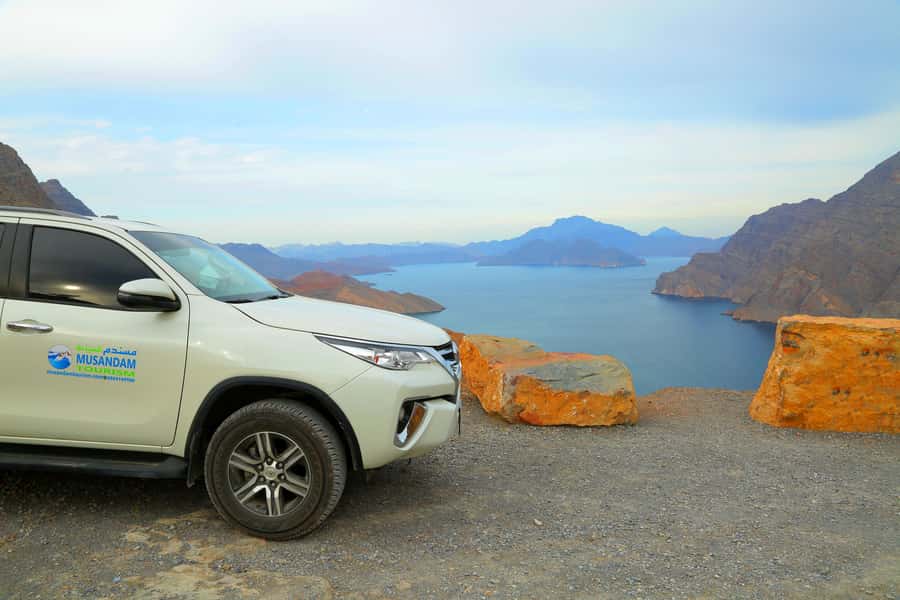
Mountains rise fast from Khasab. This private 4WD trip reaches Jebel Harim, Musandam’s highest peak, with cliff-top viewpoints, ancient fossils, and a striking view over Khawr Najid. I like the personal feel of a private vehicle, and I like that pickup is available from Khasab Port or the airport. The main drawback is the price: $269 for up to two people is a serious spend for three and a half hours.
The trip also earns points for its guides. Saphir is praised for friendly service, safety, and a tasty karak tea, while Ansi is remembered as a careful driver who explained local life and answered questions. You should still expect a rough, winding mountain ride, and the excursion is not suitable for pregnant people or anyone with mobility impairments.
In This Review
- Key points about the Jebel Harim mountain safari
- Leaving Khasab for the Musandam mountains
- Why Jebel Harim is more than a mountain drive
- The fossil wall and an ancient seabed
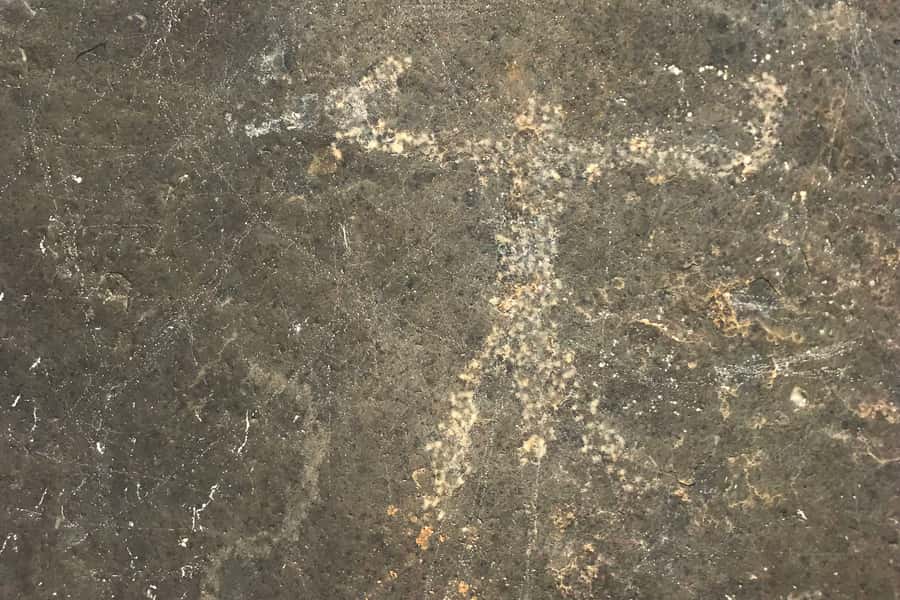
- Sayah village and the 3,000-year-old rock paintings
- Khawr Najid delivers the strongest view
- What the 4WD ride feels like
- Drinks, timing, and the private group setup
- What this safari does particularly well
- Who should book this mountain safari?
- Final verdict: scenic, personal, and costly
- FAQ
- How long is the Jebel Harim mountain safari?
- How much does the tour cost?
- Is pickup included?
- What language does the guide speak?
- Is this a private tour?
- What is included in the price?
- What should I bring?
- Is the tour suitable for pregnant women or people with mobility impairments?
Key points about the Jebel Harim mountain safari
- Jebel Harim reaches about 6,000 feet: You gain height quickly from Khasab and get wide views toward the town, Dibba, and the sea.
- The fossil wall is a natural history lesson: Ancient seabed rock contains visible impressions of shells, crabs, starfish, fish, clams, mollusks, and trilobites.
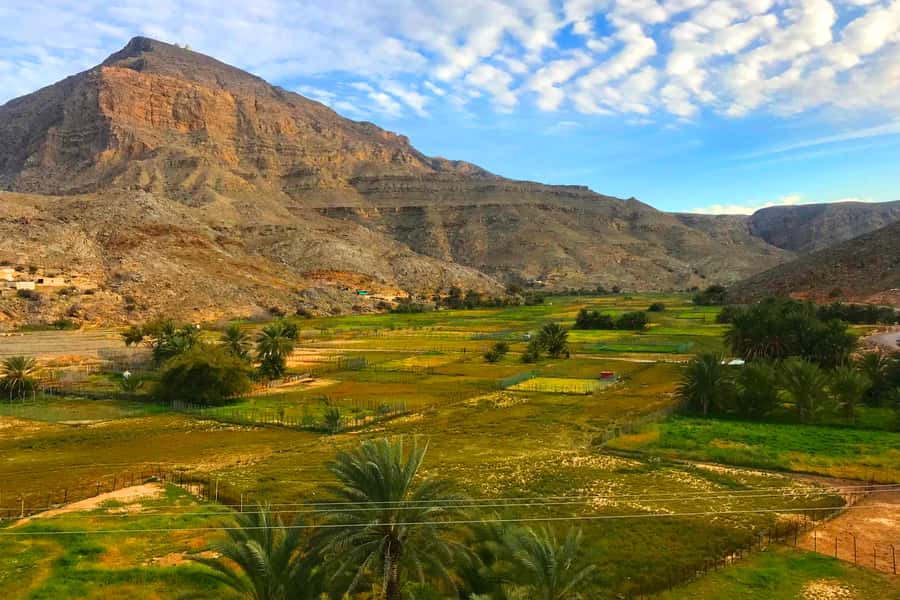
- Sayah adds a human story: This small Bedouin settlement is known for rock paintings said to be about 3,000 years old.
- Khawr Najid is the big view: The lookout provides one of the most memorable photo stops on the route, with the Indian Ocean stretching below.
- A private group keeps the outing flexible: The price covers up to two people, with a guide, 4WD vehicle, water, and packed juices included.
Leaving Khasab for the Musandam mountains
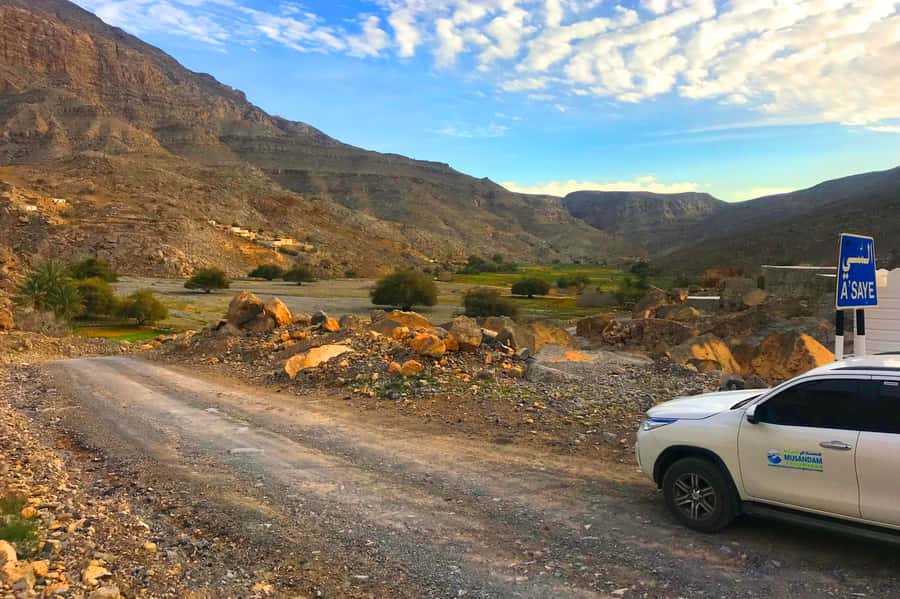
Your outing begins with pickup in Khasab, including the cruise port or airport. Six pickup points are listed in and around the town, so check your exact meeting place carefully and arrive at least 15 minutes early.
The drive quickly changes character. Khasab sits on the coast, but Jebel Harim rises sharply behind it, turning the short transfer into a proper mountain run. You ride in a 4WD vehicle, not a standard sightseeing bus, which matters on steep and uneven roads.
The advertised duration is 210 minutes, or three and a half hours. That is enough time for several stops without turning the trip into a full-day outing. You will spend much of the visit driving between viewpoints, so bring comfortable shoes and be ready for a vehicle-based experience rather than a long walking tour.
I like this format for cruise passengers. You get a strong taste of Musandam without committing your entire port call to one excursion. The private arrangement also means you are not tied to a large group, though the available details do not promise a customized route or extended time at every stop.
More mountain tours in Khasab:
- Mountain Safari in Jebel Harim
★ 5.0 · 11 reviews - Khasab Musandam Mountain Safari To Khor Najd and Jebel Al Harim
★ 4.5 · 8 reviews - Khasab Half Day Mountain Safari to Jebal Al Harim & khor Al Najd
★ 5.0 · 6 reviews
Why Jebel Harim is more than a mountain drive
Jebel Harim translates as the mountain of women and is the highest peak in Musandam. The summit reaches roughly 6,000 feet above sea level, giving the trip its main visual reward: a high perch over a dry, sharply cut corner of Oman.
At the top is a radar station that monitors shipping far below in the Straits of Hormuz. You should not expect to tour the station, but its presence adds useful context. This is not only a scenic mountain. The height and location matter for watching one of the world’s important sea routes.
From the upper viewpoints, you can look back toward Khasab and onward toward Dibba. The views are broad rather than polished. Musandam is famous for bare rock, steep ridges, and sudden drops, so the appeal is in the powerful geology and open space, not greenery or grand buildings.
Bring a camera, but also take a moment to look without it. The best part of a high viewpoint is often the scale: Khasab becomes small below, roads thread through the rock, and the sea appears far beyond the dry ridges.
The fossil wall and an ancient seabed
One of the most unusual stops is the fossil wall. The rock was once part of the seabed and is covered with fossilized impressions. You may be able to make out outlines of crabs, starfish, shells, fish, clams, mollusks, and trilobites.
That makes this stop valuable even if you are not a geology enthusiast. You are looking at physical evidence that this high mountain rock once lay beneath the sea. The contrast between the present setting and the rock’s former life gives the drive a clear sense of time.
The descriptions of the fossils are impressive, but keep your expectations sensible. This is an outdoor rock formation, not a museum exhibit with displays, lighting, or a formal gallery. The quality of what you see can depend on the viewing angle, the guide’s explanation, and the light.
A guide adds real value here. A careful explanation can help you notice details that would otherwise look like ordinary marks in pale stone. This is one reason I would choose the private option over simply hiring a car and driving past the area.
Sayah village and the 3,000-year-old rock paintings
The route includes Sayah, a small mountain hamlet still occupied by desert-dwelling Bedouin people. The village offers a different kind of stop from the viewpoints and fossil wall because it connects the mountain to people who continue to live in this demanding setting.
Sayah is known for ancient petrographs, or paintings and markings placed on rock faces. They are described as about 3,000 years old. You should not expect a large archaeological site with extensive visitor facilities. The attraction is the rock face itself and the chance to see a small settlement with an old connection to the surrounding mountains.
This stop may be brief, but it helps prevent the trip from becoming only a sequence of photo stops. You see how Musandam’s mountains have supported human life as well as ancient sea creatures.
Be respectful around the village. The information provided does not promise a formal visit inside homes or a staged cultural program. Treat Sayah as a lived-in community, not a theme park, and follow your guide’s direction about where to walk and what to photograph.
More safari runs in Khasab:
- Khasab Musandam Mountain Safari
★ 5.0 · 4 reviews - Desert Safari Sharing Tours
★ 5.0 · 313 reviews - East Salalah Mountain Safari, Wadi Darbat, Beach, Camels, Dunes
★ 5.0 · 206 reviews - Desert Safari Private
★ 5.0 · 177 reviews
Khawr Najid delivers the strongest view
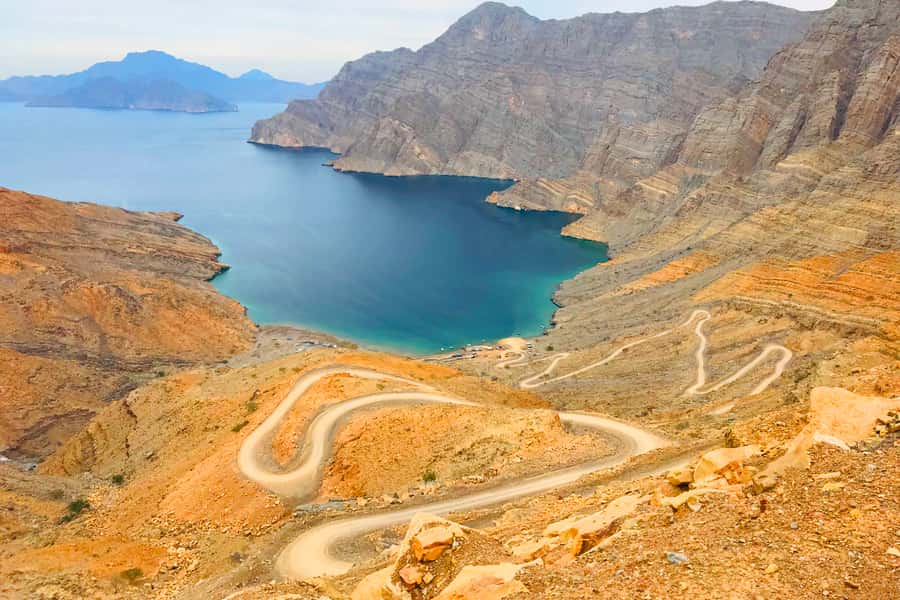
The Khawr Najid viewpoint is the visual high point of the excursion. From here, you get a sweeping vista toward the Indian Ocean, with the mountain terrain dropping away below.
This is the place to save your best photographs, especially if you enjoy dramatic views with little development in sight. The height creates a sense of distance that you do not get from Khasab’s streets or the lower coastal roads.
The word k hawr refers to a coastal inlet, but the available information focuses on the lookout rather than a descent to the water. Do not book this expecting a beach visit, swimming, or a boat ride. It is a mountain viewpoint reached by 4WD.
The route is also weather-sensitive in a practical sense. At high elevation, conditions can feel different from those in town, although no specific seasonal temperature information is provided. Comfortable shoes are required, and sensible clothing for a rough mountain outing will make the stops easier.
What the 4WD ride feels like
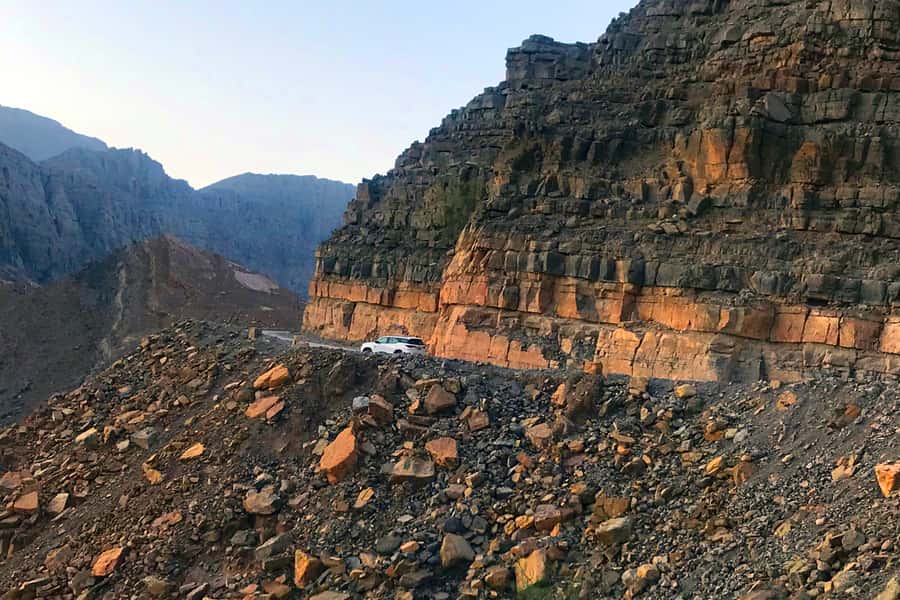
The vehicle is central to the experience. You travel up winding mountain roads and stop at viewpoints along the way, so the drive itself is part of the tour rather than dead time between attractions.
I would choose this trip if you enjoy seeing a region from the road and do not mind a bumpy ride. I would be more cautious if you get motion sick or need a smooth, highly accessible outing. The experience is specifically marked as unsuitable for people with mobility impairments and pregnant women.
There is some walking at the stops, including sightseeing and photo pauses. The exact amount is not specified, so you should be prepared to get out of the vehicle on uneven ground and stand for short periods.
The guide can make a major difference. Saphir is praised for keeping the time enjoyable, helping passengers feel safe, and serving karak tea. Ansi is praised for being well prepared, driving carefully, and explaining the country and its people. Those details suggest that the human side of the trip is one of its strongest features.
English is the stated guide language. If you want detailed information about geology, archaeology, or local customs, ask questions directly. A private group gives you a better chance to do that than a crowded vehicle.
Drinks, timing, and the private group setup
Mineral water and packed juices are included, along with light refreshments. One account also highlights fruit and karak tea, though the formal inclusions specifically promise water and juices, so treat extra refreshments as a pleasant possibility rather than a guaranteed menu.
The tour is private for up to two people. At $269 per group, the cost works out to $134.50 each when two people share it. That is expensive compared with a standard shared excursion, but it is easier to justify if you value privacy, port pickup, a dedicated guide, and a direct trip to the mountain.
The price is less attractive for a solo participant because the group rate does not fall to half. It makes more sense for a couple or two friends who want a short, organized outing and do not want to arrange transport themselves.
The three-and-a-half-hour length is well suited to a port visit. You get the major mountain sights, but you should not expect a long archaeological exploration, a leisurely village stay, or time to cover every part of the Musandam Peninsula.
Pickup and drop-off are available at Khasab locations, including Khasab Port and Khasab Airport. Make sure you confirm the exact point because several locations are listed with similar labels, including a gas station and Diwan Al Amir.
What this safari does particularly well
The strongest feature is the variety packed into a short route. In one half-day, you can see a high mountain summit, a radar station, a fossil wall, an old rock-art site, a Bedouin village, and the sea from Khawr Najid.
The guides also receive unusually warm praise for their driving and personal service. Safety matters on a mountain road, and positive comments about Saphir and Ansi suggest that good guiding is not limited to pointing out scenery. You can expect help with orientation, local questions, and the rhythm of the stops.
The private format is another plus. You avoid being one face in a large crowd, and you have a better chance of asking questions or taking an extra moment at a viewpoint, although the exact flexibility is not guaranteed.
The weak point is value for money. A three-and-a-half-hour trip at $269 for two is not a bargain. One direct assessment calls the cost discouraging, even while praising the safari itself. I agree with that balance: the sights are distinctive, but the fee needs to fit your budget.
Who should book this mountain safari?
I would recommend it to couples, cruise passengers, and first-time visitors who want a concentrated introduction to Musandam. It suits you especially well if you prefer mountain views and cultural stops to a full day on the water.
It is also a good choice if you want a private vehicle and an English-speaking guide. The route gives you enough variety to feel like you have seen several sides of the peninsula, not just one lookout.
I would skip it if you are pregnant, have mobility limitations, or dislike rough mountain roads. I would also compare the cost with other Khasab activities if you are traveling alone or are mainly interested in the coast.
For photographers, the high viewpoints and fossil wall are the main draw. For history-minded visitors, Sayah and the ancient petrographs add purpose to the drive. For anyone who simply wants a scenic port excursion, the route offers a lot without taking the whole day.
The stated cancellation terms allow a full refund when you cancel at least 24 hours ahead, and you can reserve while paying later. Those policies help if your port schedule is not fully settled, but you still need to arrive at the correct pickup point on time.
Final verdict: scenic, personal, and costly
I would book this Jebel Harim safari if I had two people to share the price and wanted a private shore excursion with strong mountain scenery. The combination of 6,000-foot views, ancient seabed fossils, Sayah’s rock paintings, and Khawr Najid is hard to match in such a short outing.
I would think twice if price is your main concern. The tour is not cheap, and the ride is not designed for every body or every comfort level. But for the right pair, the guide service, private vehicle, and unusual stops make this a memorable way to see the high country above Khasab.
FAQ
How long is the Jebel Harim mountain safari?
The experience lasts 210 minutes, or about three and a half hours.
How much does the tour cost?
The price is $269 per private group of up to two people.
Is pickup included?
Yes. Pickup is included from preferred locations in Khasab, including Khasab Port and Khasab Airport.
What language does the guide speak?
The stated guide language is English.
Is this a private tour?
Yes. The group type is private, with space for up to two people at the listed price.
What is included in the price?
The tour includes pickup, a half-day 4WD safari to Jebel Harim, guide service, mineral water, and packed juices. Personal expenses are not included.
What should I bring?
Bring comfortable shoes. The tour includes stops for sightseeing, walking, and photography in a mountain setting.
Is the tour suitable for pregnant women or people with mobility impairments?
No. The experience is listed as unsuitable for pregnant women and people with mobility impairments.
Newest Khasab trips added here
- Khasab Half Day Mountain Safari to Jebal Al Harim & khor Al Najd★ 5.0 · 6 reviews
- Musandam Khasab Full day dhow cruise with Lunch★ 5.0 · 8 reviews
- Mountain Safari in Jebel Harim★ 5.0 · 11 reviews
- Khasab Musandam Mountain Safari To Khor Najd and Jebel Al Harim★ 4.5 · 8 reviews
- Khasab Musandam Half Day Dhow Cruise★ 5.0 · 13 reviews
- Half Day Dolphin Watching Musandam Dhow Cruise★ 5.0 · 5 reviews
- Khasab Musandam Mountain Safari★ 5.0 · 4 reviews
- Khasab Dhow Cruise Full day, Buffet Lunch on Board, swimming★ 5.0 · 5 reviews
Oman Mountain Tours, compared.
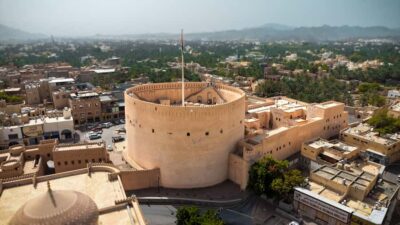
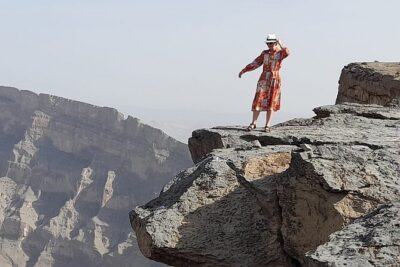
Nizwa Fort-Nizwa Souq-Misfah Al Arbyeen-Jebel Shams – Private Full Day Tour
Read our review →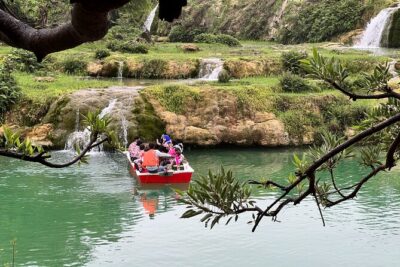
East Salalah Mountain Safari, Wadi Darbat, Beach, Camels, Dunes
Read our review →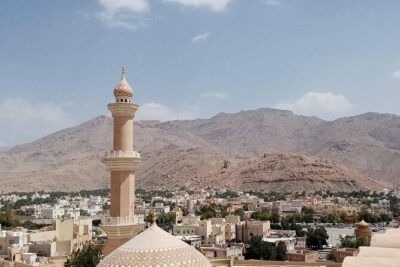
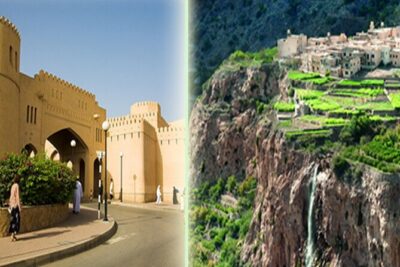
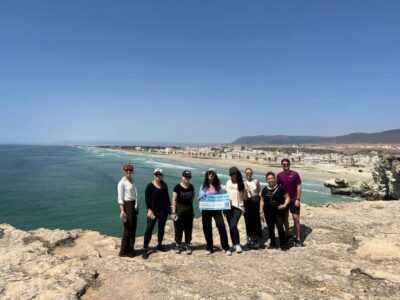
Wadi Darbat, Jabal Samhan, Baobab, Mirbat Sand Dune
Read our review →
Browse the lists this tour appears in