Reviewed · WALKING TOURS
Guided Walking Tour of Sultan Qaboos Grand Mosque in Muscat
Beauty here has a purpose. This one-hour walk through Muscat’s Sultan Qaboos Grand Mosque combines spectacular design with clear explanations of Islamic art, Omani craftsmanship, and Sultan Qaboos’s role in modern Oman. I especially like the chance to see the main prayer hall and the women’s prayer hall, two spaces where small details carry real meaning.
I also like the price: $10 per person is a fair deal for an English-speaking guide who helps you notice far more than you would on a quick self-guided visit. The main consideration is the short one-hour format. It gives you a strong introduction, but you will need to keep moving, and you must arrange your own transport to the mosque.
In This Review
- Key points to know before you go
- Why this mosque deserves a place in your Muscat plans
- Meeting your guide at the central gate
- First view: five minarets and the 50-meter dome
- The main prayer hall and its immense carpet
- Calligraphy, tilework, and the meaning behind the patterns
- The women’s prayer hall and quieter details
- Open-air corridors, gardens, and reflecting pools
- What the $10 price really buys you
- Who should book this one-hour walk?
- Final verdict: a small price for a fuller visit
- FAQ
- How long is the Sultan Qaboos Grand Mosque tour?
- What language is the tour conducted in?
- Where do I meet the guide?
- What should women wear for the tour?
- What should men wear for the tour?
- Is transportation included?
Key points to know before you go
- The main prayer hall contains a vast hand-woven carpet: More than 4,000 square meters of detailed pattern were made by 600 artisans over four years.
- The 14-meter chandelier is a major highlight: Hundreds of thousands of Swarovski crystals fill the great hall with sparkle.
- The five minarets have symbolic meaning: Each represents one of the Five Pillars of Islam.
- The tour includes the women’s prayer hall: This gives you a closer look at another ornate part of the complex.
- Modest dress is essential: Women need covered arms and legs plus a headscarf, while men need long pants and covered shoulders.
- The guide adds the real value: The design’s symbols, Quranic verses, and architectural influences are easier to understand with explanation.
Why this mosque deserves a place in your Muscat plans
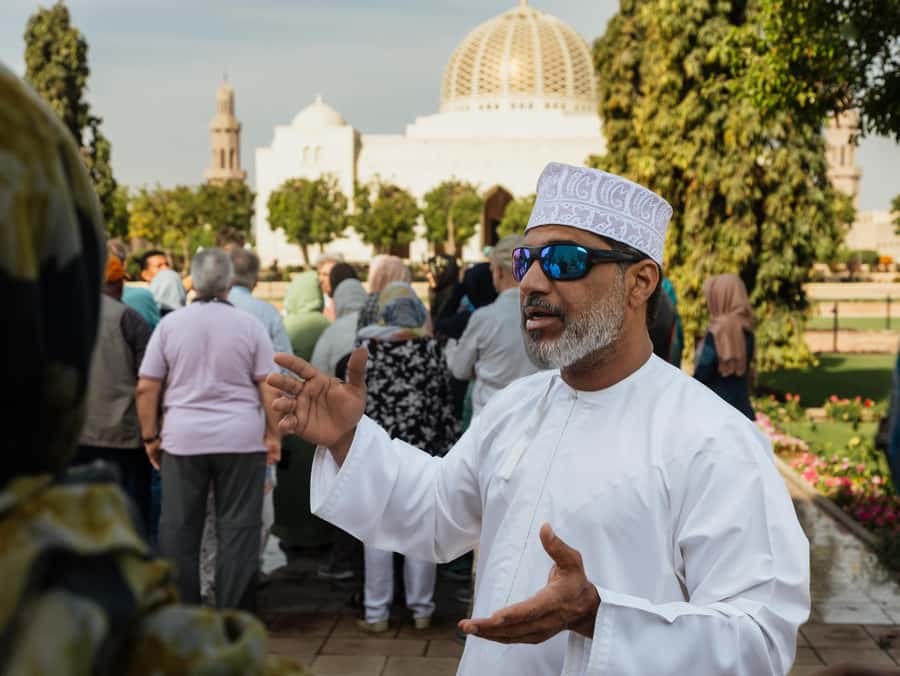
The Sultan Qaboos Grand Mosque is not simply a large religious building that you photograph from outside. It was inaugurated in 2001 to mark the 30th year of Sultan Qaboos bin Said’s reign, and it was intended as a gift to the Omani people.
That background matters. The complex reflects Oman’s cultural renewal under Sultan Qaboos, along with his emphasis on faith, learning, harmony, and national identity. You can see that ambition in the scale of the building, but also in its careful details.
The mosque brings together Omani motifs with touches associated with Persian, Ottoman, and Mughal design. Carved teakwood, polished sandstone, mosaic tilework, Arabic calligraphy, gardens, and broad courtyards all work together. The result is grand without feeling like a pile of unrelated decorations.
I find a guided visit particularly useful here because the building contains plenty to look at, but not every detail explains itself. A guide can tell you why a geometric pattern is used, what a Quranic inscription means, and how local materials fit into the wider design.
The current rating is 4.9 from 12 bookings, with the strongest praise focused on the guide’s explanations, the striking decoration, and the way the tour reveals meaning in small features. That matches the main reason to book: you are paying for context, not just entry.
More walking tours in Muscat:
- Muscat: Guided Walking Tour of Corniche, Souq & Mutrah Fort
★ 5.0 · 14 reviews - Private Full Day Guided Balcony Walk Hiking to Jebel Shams
★ 5.0 · 11 reviews - Full Day Guided Tour to Balcony Walk and Hidden Lake With Pickup Included
★ 5.0 · 8 reviews
Meeting your guide at the central gate
You meet at the main visitor entrance, near the central gate facing the main parking area. Look for a guide holding a GidOman sign, and arrive 10 minutes early.
That extra time is worth taking seriously. The mosque complex is large, and you do not want to be searching for the meeting point while the group is setting off. The tour does not include transport, so you also need to plan your own route to the mosque and allow time for parking or drop-off arrangements.
This is a walking tour, so wear comfortable shoes. You will cross marble courtyards, pass through open-air corridors, and move between several areas of the complex. It is not a long excursion, but the hard surfaces and warm Muscat weather can make poor footwear unpleasant.
The guide speaks English. The group size is not specified, so you should not assume a private tour. Still, the format can sometimes feel personal. One recent booking described a morning when the group was alone with the guide, which allowed for a more individual explanation. That is possible, but it is not something you can count on when reserving.
First view: five minarets and the 50-meter dome
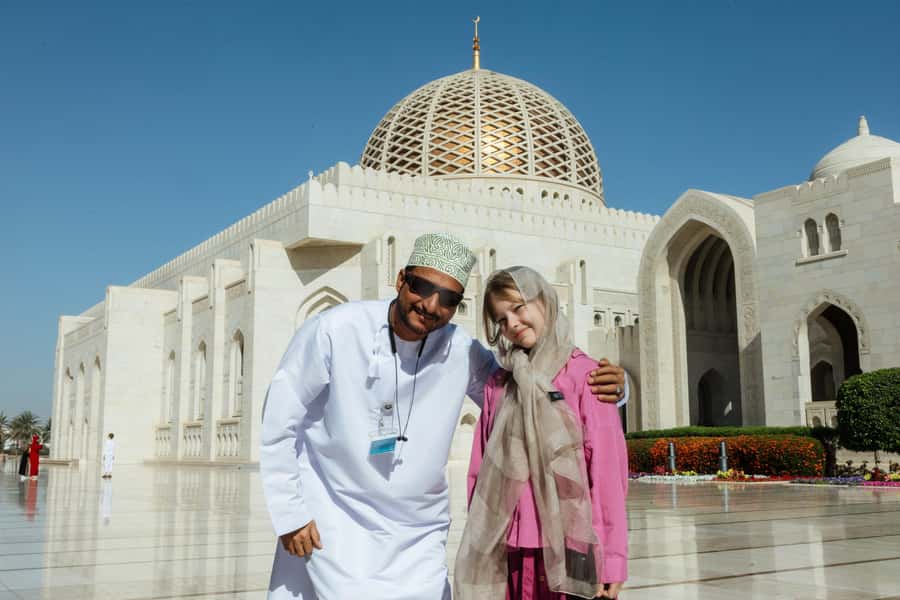
The opening sight is the mosque’s full exterior, with five tall minarets and a central dome rising 50 meters above the complex.
The minarets are not simply there to create a dramatic skyline. Each one represents one of the Five Pillars of Islam. That is the kind of detail you might miss if you arrive, take a picture, and leave. With a guide, the building begins to read as a place shaped by religious ideas, not just by an architect’s wish for scale.
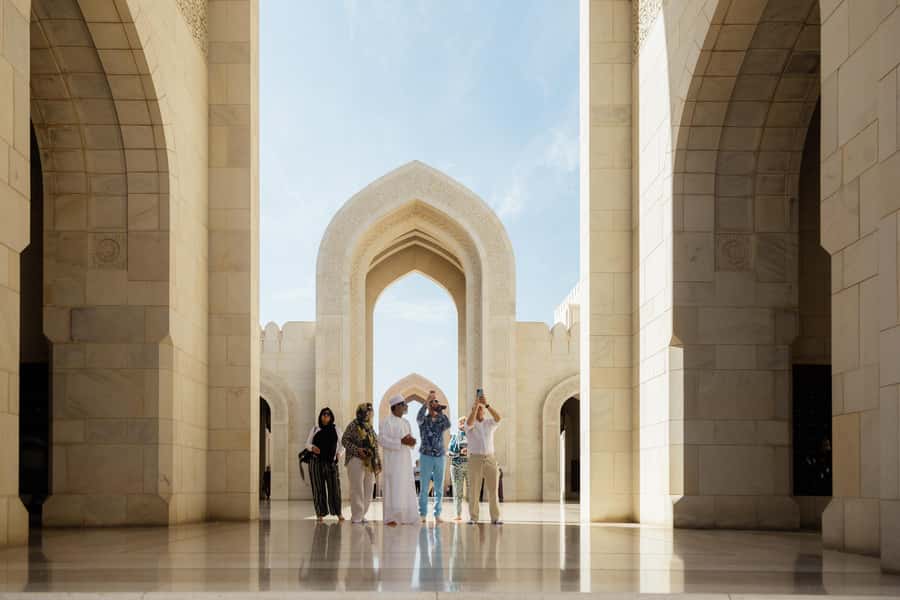
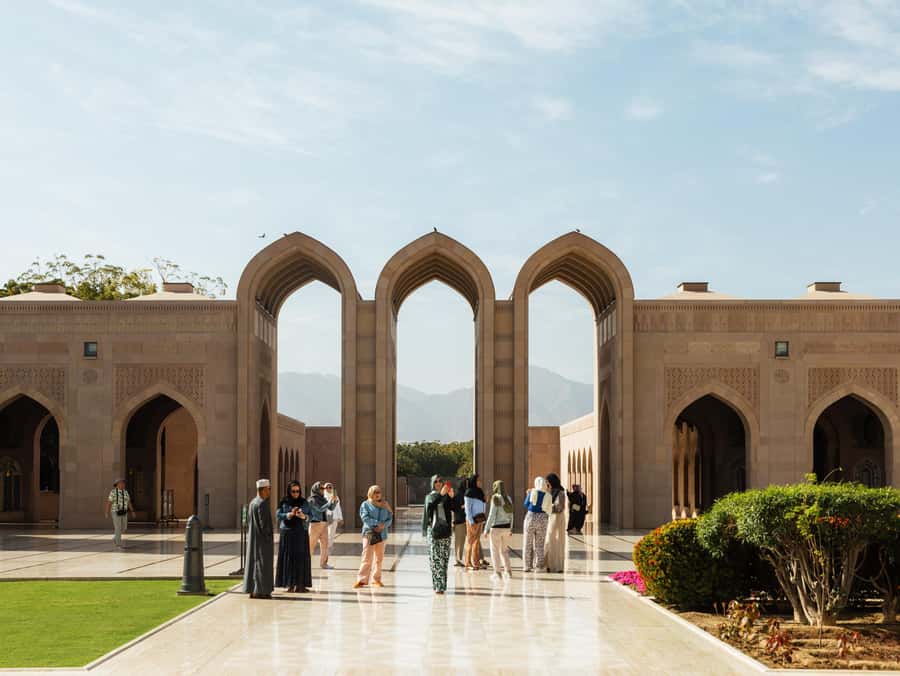
The ivory and red-brown marble exterior gives the mosque a calm, formal appearance. Elegant archways frame the courtyards, while floral gardens soften the hard stone around them. The contrast is effective: broad areas of pale marble meet clipped greenery, shaded passages, and reflecting pools.
I like this part of the walk because it gives you time to adjust to the scale of the complex. Muscat can feel busy around its main roads, but inside the mosque grounds the mood changes quickly. The gardens and courtyards create a quiet buffer, and the open space lets you appreciate the proportions before entering the richly decorated halls.
Photography is allowed in most areas, but this is still an active place of worship. Keep your camera use respectful, follow the guide’s instructions, and avoid treating the mosque like a studio set.
The main prayer hall and its immense carpet
The main prayer hall is the tour’s great interior reveal. Its floor is covered by one of the world’s largest hand-woven carpets, measuring more than 4,000 square meters.
The scale alone is impressive, but the making of the carpet gives it greater meaning. Six hundred artisans worked on it for four years, producing intricate patterns that can be hard to take in at a glance. From the edge of the hall, you may first notice the overall color and size. Then the smaller forms begin to appear as you look closer.
This is where the guide earns the $10 fee. A large carpet can become just another large object when you do not know what you are seeing. Explanations about the patterns and their place in Islamic art help turn the floor into part of the building’s message.
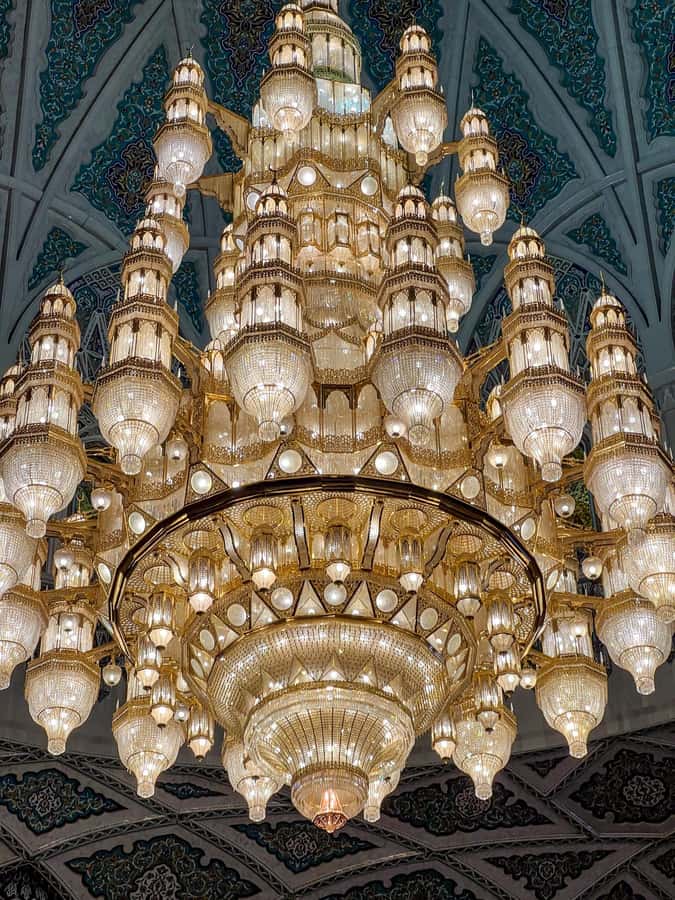
The hall is designed to make you look upward as well. A 14-meter crystal chandelier hangs above, filled with hundreds of thousands of Swarovski crystals. It is a dramatic counterpoint to the carpet below, with the patterned floor drawing your gaze down and the chandelier pulling it toward the dome.
The combination could easily feel excessive, but the hall’s size gives the decoration room to breathe. You are not looking at a single ornament in isolation. You are seeing how floor, ceiling, light, calligraphy, and geometry were planned as one setting for prayer.
Expect the main hall to be the busiest part of your attention, even though the tour itself lasts only an hour. Give yourself a moment to look beyond the obvious attractions. The carpet and chandelier are the headline features, but the wall surfaces, doors, and ceiling designs reward slower observation.
More Muscat trips to compare:
- Muscat: Daymaniat Islands Snorkeling Trip with Brunch
★ 4.7 · 2,317 reviews - From Muscat: Wadi Shab & Bimmah Sinkhole Full-Day Tour
★ 4.8 · 1,862 reviews - Muscat: Wahiba Desert and Wadi Bani Khalid Guided Group Tour
★ 4.8 · 820 reviews - Muscat: Half-Day Sightseeing Essentials Tour and Audio Guide
★ 4.2 · 598 reviews
Calligraphy, tilework, and the meaning behind the patterns
Arabic calligraphy and colorful mosaic tilework cover sections of the walls and domed ceiling. The guide explains the Quranic verses and the geometric designs, helping you understand why repetition and balance matter so much in Islamic decoration.
The geometric work is not random ornament. Its symmetry creates order, and that order contributes to the peaceful feeling of the hall. You may not remember every design term, but you will begin to see that the building’s beauty comes from discipline as much as from color and shine.
Carved teakwood details add warmth to the stone and tile. They also point toward Omani craftsmanship, while the broader forms show influence from other Islamic building traditions. This blend gives the mosque a distinct identity. It is international in its references, but firmly connected to Oman.
I would pay close attention when the guide discusses the inscriptions. Visitors often remember the carpet and chandelier, but the words on the walls explain why the building feels solemn rather than merely luxurious. The tour’s strongest quality is its ability to connect visual beauty with faith and purpose.
The explanations also make this a good choice for a first visit to Oman. You do not need prior knowledge of Islam or Omani architecture to follow along. The guide’s role is to make the symbolism accessible without turning the walk into a lecture.
The women’s prayer hall and quieter details
The itinerary also includes the women’s prayer hall. It is smaller and more intimate than the main hall, but it receives the same care in its design.
Here you can notice carved wooden doors, delicate lighting, and carefully planned decoration. This stop adds an important dimension to the visit because it shows that the complex is not only about the enormous central hall. The smaller rooms were also designed to feel dignified, complete, and welcoming.
I appreciate this part of the tour because it slows the focus from record-setting scale to human use. A place of worship has to work for people, not only impress them. The women’s prayer hall helps you see how the mosque’s design addresses different spaces within the religious complex.
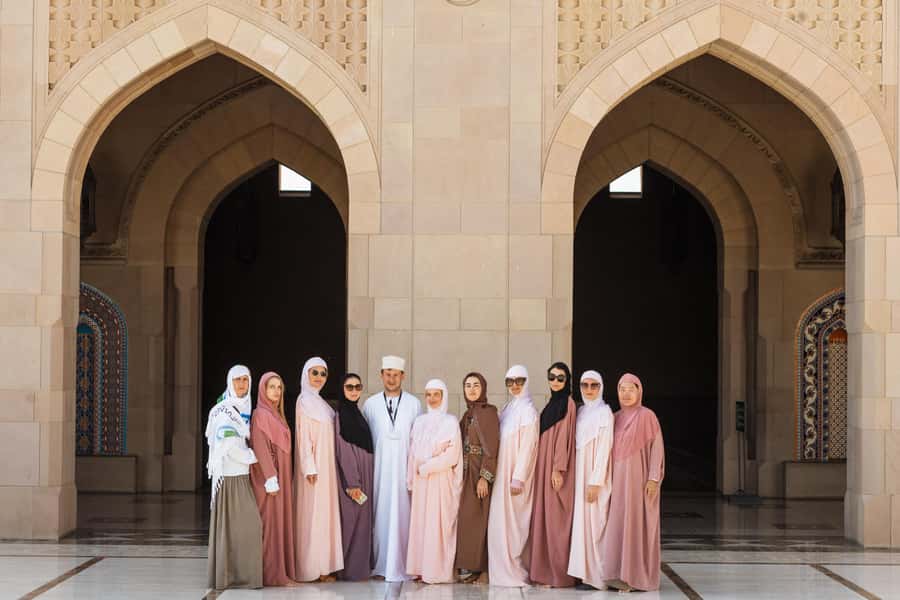
As with the main hall, dress rules apply. Women must wear long sleeves and long pants or a long skirt, and they must bring a headscarf. Men need long pants and covered shoulders. Headscarves and suitable clothing are not included, so prepare these items before arriving rather than hoping to find them at the entrance.
Open-air corridors, gardens, and reflecting pools
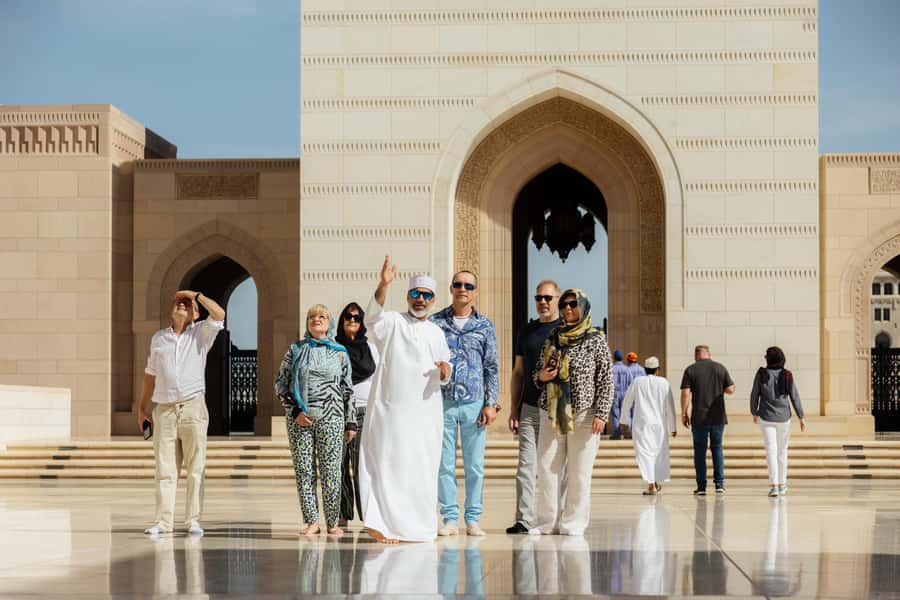
After the prayer halls, the walk continues through open-air corridors lined with polished sandstone columns. Informative displays add more background, while views open toward the gardens around the mosque.
This part of the tour gives your eyes a break from the dense decoration indoors. The columns create repeating frames for the courtyards, and the greenery brings shade and color to the pale stone. Reflecting pools add stillness and create some of the best photo angles of the mosque’s ivory and red-brown exterior.
The gardens are immaculately kept, but the main pleasure is not gardening for its own sake. The planted areas make the large complex easier to read and more comfortable to experience. They also reinforce the mosque’s sense of calm.
The one-hour duration is both a strength and a limit here. You get a focused route through the key areas without giving up half a day. That suits a first-time visitor fitting the mosque between other Muscat sights.
On the other hand, you should not expect a leisurely photographic session in every courtyard. The guide has several stops to cover, and the tour remains a walking introduction. If you want to study every tile or take dozens of exterior pictures, plan extra time around the guided portion if visiting arrangements allow it.
What the $10 price really buys you
At $10 per person, this is inexpensive for a guided cultural visit. Bottled water is included, along with the English-speaking guide, but transport and suitable clothing are not.
The value is not in the physical movement through the complex. You could walk through some areas and see the major sights without paying for a guide. The value comes from understanding what the five minarets represent, why the carpet matters, how the inscriptions relate to the space, and how Omani design meets wider Islamic traditions.
I would consider the tour good value for first-time visitors, architecture fans, and anyone who wants more than exterior photographs. It is also a practical choice if you have limited time in Muscat and want one polished cultural stop.
For repeat visitors who already know the mosque well, the price may feel less necessary. The tour is short and follows a set introduction rather than offering specialist study of one subject. Still, the guide’s explanations can reveal small features you missed before.
The flexible booking terms also help. You can reserve now and pay later, and cancellation is free up to 24 hours before the start for a full refund. Starting times depend on availability, so check the schedule before building the rest of your day around it.
Who should book this one-hour walk?
I would recommend it to:
- First-time visitors to Muscat who want clear cultural context
- People interested in Islamic art, architecture, and religious design
- Visitors who prefer a short, focused activity
- Photographers who want to understand the best exterior and interior details
- Anyone unsure how to read the mosque’s symbols and inscriptions
- Cruise or short-stay visitors working with limited time
I would be more cautious if you dislike guided pacing or want complete freedom to linger. The one-hour route is efficient, but it may feel quick for someone who wants to inspect every surface.
Families and older visitors should also consider the walking format and the amount of time spent on hard marble and stone. Comfortable footwear is a simple but important choice.
Final verdict: a small price for a fuller visit
I would book this tour if the Sultan Qaboos Grand Mosque is on your Muscat list, especially if it is your first visit.
The building is impressive without help, but the guide makes it intelligible. You see the giant carpet, glittering chandelier, gardens, halls, and minarets, then learn how each fits into Oman’s religious and cultural story. That added meaning is what turns a quick sightseeing stop into a worthwhile hour.
Book it if you value explanation, have suitable clothing ready, and can reach the main visitor entrance on time. Skip it only if you already know the mosque well or prefer to explore entirely at your own pace. At $10, the risk is low, and the chance of gaining a better understanding of Muscat’s most important architectural landmark is high.
FAQ
How long is the Sultan Qaboos Grand Mosque tour?
The guided walking tour lasts one hour.
What language is the tour conducted in?
The live tour guide speaks English.
Where do I meet the guide?
Meet at the main visitor entrance of the Sultan Qaboos Grand Mosque, near the central gate facing the main parking area. Look for a guide holding a GidOman sign.
What should women wear for the tour?
Women must wear long sleeves, long pants or a long skirt, and bring a headscarf. Appropriate clothing and a headscarf are not included.
What should men wear for the tour?
Men must wear long pants and cover their shoulders.
Is transportation included?
No. You are responsible for arranging transportation to and from the mosque. Bottled water and the guided tour are included.
Newest Muscat trips added here
- Wahiba Desert Safari Adventure , Swimm in Wadi Bani Khalid★ 4.5 · 2 reviews
- Wadi Shab &Bimmah Sinkhole &Heart shaped Cave &Pebble Beach★ 5.0 · 5 reviews
- wadi shab and bimmah sinkhole tour from muscat★ 5.0 · 2 reviews
- Try scuba Diving Tours To Daymaniyat Islands.★ 5.0 · 12 reviews
- Private 2-Day Guided Tour with Nizwa Friday Market Visit★ 5.0 · 2 reviews
- Private scuba diving trips Muscat★ 4.5 · 2 reviews
- From Muscat Wadi Shab and Bimmah Sinkhole Tour★ 5.0 · 6 reviews
- Wahiba Sands&Wadi Bani Khalid desert Safari(Muscat tours)★ 4.5 · 6 reviews
Walking Tours, compared.
Guided Walking Tour of Corniche, Souq & Mutrah Fort
Read our review →
Jebel Shams Balcony Walk and Via Ferrata Adventure
Read our review →
Balcony Walk of Jebal Shams (Highest Peak of Oman)
Read our review →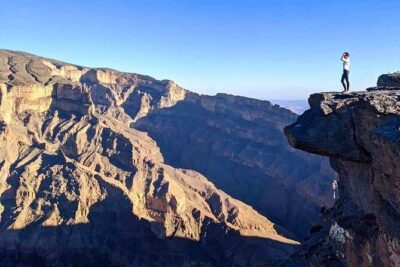
Private Full Day Guided Balcony Walk Hiking to Jebel Shams
Read our review →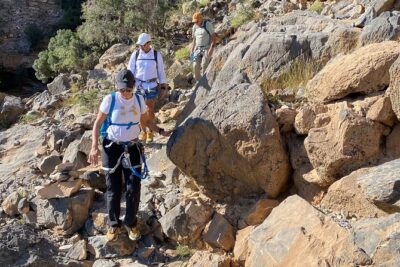
Full Day Guided Tour to Balcony Walk and Hidden Lake With Pickup Included
Read our review →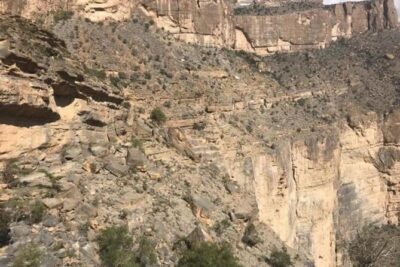
Private Full Day Trekking In the Grand Canyon (Balcony Walk)
Read our review →