
Reviewed · WADI TOURS IN SALALAH
Half Day East of Dhofar with Wadi Darbat
Water, ruins, and camels make a fine morning. This four-hour outing links four of East Dhofar’s best-known sights, from the springs at Ain Razat to the blue water of Wadi Darbat and the old frankincense port at Sumhuram. I like the private transport and the mix of nature and culture in one compact trip.
I also like the chance to travel with a guide such as Said, whose clear explanations and friendly manner earned special praise. The main drawback is the short schedule: driving, hotel pickup, and drop-off all fit inside four hours, so each stop gets limited time. You should also budget for entrance charges at Taqah and Sumhuram.
In This Review
- Key points before you book
- What this East Dhofar tour is really about
- Ain Razat: Dhofar’s dependable source of water
- Wadi Darbat: water, caves, and camels
- Taqah: a coastal town with a strong local story
- Sumhuram: the frankincense port at Khor Rori
- The route works best with a good guide
- Timing, cost, and practical planning
- Who will get the most from this tour?
- Should you book it?
- FAQ
- How long does the East Dhofar tour last?
- Which places are included on the tour?
- Is hotel pickup available?
- Are entrance fees included?
- Is this a private tour?
- What happens if bad weather cancels the tour?
Key points before you book
- Four sights in about four hours: Ain Razat, Wadi Darbat, Taqah, and Sumhuram fit into one eastern Dhofar circuit.
- Private tour format: Only your group takes part, with an air-conditioned vehicle and hotel pickup offered.
- Wadi Darbat changes with the season: Khareef brings stronger waterfalls and more greenery, while the wadi remains an all-year stop.
- Sumhuram links directly to frankincense: The ruined port was part of the ancient trade network and now forms part of the UNESCO-listed Land of Frankincense.
- Extra fees matter: The advertised price is $113 per person, but Taqah and Sumhuram entrance charges are listed separately.
- A guide can shape the day: Guide Said received especially warm praise for his explanations and attentive approach.
What this East Dhofar tour is really about
Salalah is often treated as a beach and resort base, but the eastern side of Dhofar gives you a better sense of the region’s character. Here, water rises from mountain springs, wadis run toward the coast, old towns tell stories of trade, and frankincense connects the area to a much wider Arabian world.
This tour is designed for someone who wants the main highlights without giving up a full day. The advertised duration is about four hours, including pickup and drop-off. That is efficient, but it also means the outing moves at a firm pace. You get a useful first look at East Dhofar rather than a slow, wandering day in each place.
The private format is valuable if you dislike being tied to a large group. You can ask questions, keep your own group together, and avoid spending the morning waiting for strangers. The vehicle is air-conditioned, bottled water is provided, and private transport is included.
At $113 per person, the value depends on group size and how much convenience matters to you. The price covers transport, water, and listed taxes, but not every admission fee. Add about $11 per person for Taqah Castle and Taqah Fort, plus about $8 for Sumhuram, according to the supplied prices. That puts the likely total near $132 per person before any special transfer from Mirbat hotels.
More Wadi Tours in Salalah
- East Salalah Mountain Safari, Wadi Darbat, Beach, Camels, Dunes
★ 5.0 · 206 reviews - Salalah: Wadi Derbat, Jabal Samhan, & Sinkhole Private Tour
★ 4.9 · 42 reviews - Private tour – Empty Quarter desert adventure – Wadi Dawka + Ubar
★ 5.0 · 5 reviews
Ain Razat: Dhofar’s dependable source of water
The morning begins at Ain Razat, a collection of natural springs that helps explain why this part of Dhofar can support gardens, settlements, and wildlife. Some springs flow all year, while others appear only during Khareef, the southwest monsoon season.
The most useful detail here is that Ain Razat is not simply a seasonal photo stop. One pond and a small cave have a constant flow of water, making the place worthwhile outside the greenest months. It also serves as one of Salalah’s main water sources, which gives the stop practical importance beyond its scenery.
You have about 30 minutes here, with no admission fee listed. That is enough for a quick walk, photographs, and a look at the springs, but not a long exploration. If you want quiet time beside the water, keep your expectations modest. This is the opening scene of a busy circuit.
I like Ain Razat because it gives you a clear contrast with the dry surroundings. Water appears where you may not expect it, and your guide can help connect the springs to Dhofar’s natural setting. The stop is especially useful early in the tour, when you are still getting your bearings.
Wadi Darbat: water, caves, and camels
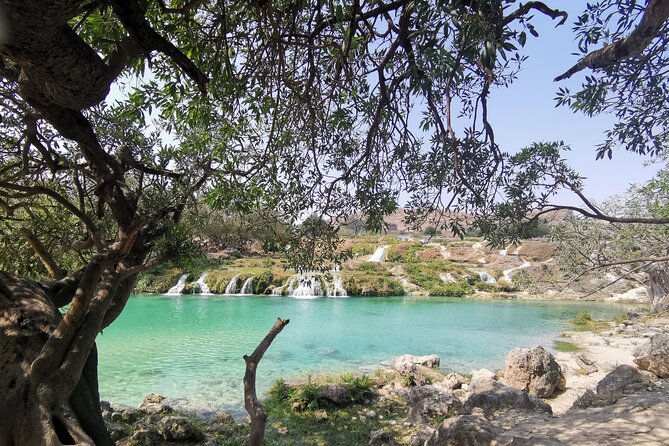
Wadi Darbat is the main nature stop, and for many people it will be the visual high point of the morning. The wadi lies in the mountains above Khor Rori, beyond the Taqah coast, and is described as a natural park with lakes, a river, caves, mountains, camels, and green plant life.
The setting changes sharply during Khareef. Rainwater from the mountains replenishes the wadi, and waterfalls can pour from heights of about 30 meters, or roughly 100 feet. The monsoon also brings the strongest display of greenery. If you visit outside Khareef, you can still see water at the wadi, but the waterfalls and plant growth may not have the same force.
The tour allows about 45 minutes here. That gives you time to take in the water, watch the camels, and walk around the picnic area. It is not enough for a long hike or a leisurely afternoon beside the river. The supplied information does not promise a boat ride, a meal, or a particular cave walk, so treat the stop as a scenic visit rather than a full outdoor activity.
One account of the wider excursion included a picnic, and the wadi has a large picnic area. Still, food is not listed among the inclusions. Bring your own snacks only if your pickup arrangements allow it, and do not assume a picnic is part of the standard price.
Wadi Darbat is also where weather matters most. The tour requires good weather, and poor conditions can lead to a new date or a full refund. That rule makes sense for a mountain wadi, where water levels and road conditions can affect the visit.
Taqah: a coastal town with a strong local story
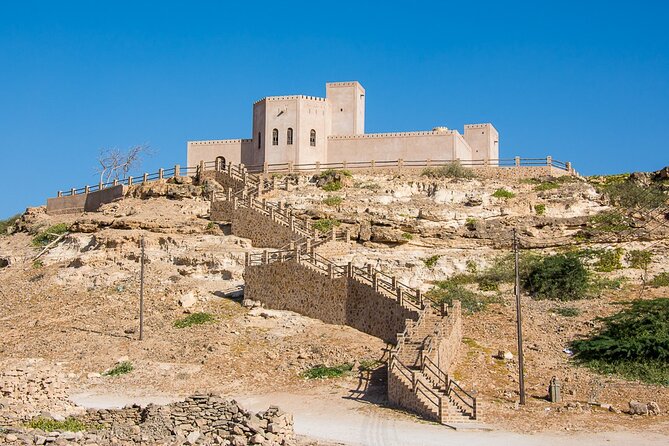
Taqah adds the cultural layer that keeps this from becoming a scenery-only drive. It is an old coastal town and fishing village in Dhofar, known for a castle surrounded by watchtowers and stone houses.
The castle interiors are described with antique jewelry, weapons, furniture, paintings, and everyday objects. These details help you picture how the building functioned as a home and defensive site, rather than seeing it as just another old structure with bare walls.
You have about an hour at Taqah, the longest scheduled stop. That extra time matters because the town includes more than a quick photograph from the road. You can take in the castle setting, learn about local life from the guide, and see how the coastal settlement fits into the wider eastern route.
There is an important price point here. Taqah Castle and Taqah Fort, also called Burj Al Askar, carry an additional entrance charge of about $11 per person. The tour information lists these fees separately, so check exactly which buildings are open and covered when you book.
The wording around Taqah includes both the castle and the fort, but the supplied schedule does not spell out how much time is assigned to each one. Your guide’s handling of the stop will therefore matter. Said was praised for explaining the sights clearly, and that kind of guidance is useful at places where displays alone may not tell the full story.
A different way to spend the day out of Salalah:
- Mountain Safari Private Tour
★ 5.0 · 105 reviews - Sunset Desert Safari Salalah Tour in Rub Al Khali – Empty Quarter
★ 5.0 · 91 reviews - Salalah: Sunset Desert Safari – Rub Al Khali – Empty Quarter
★ 4.6 · 79 reviews - West Salalah Tour – Caribbean of Orient – Fazayah Beach with City
★ 5.0 · 74 reviews
Sumhuram: the frankincense port at Khor Rori
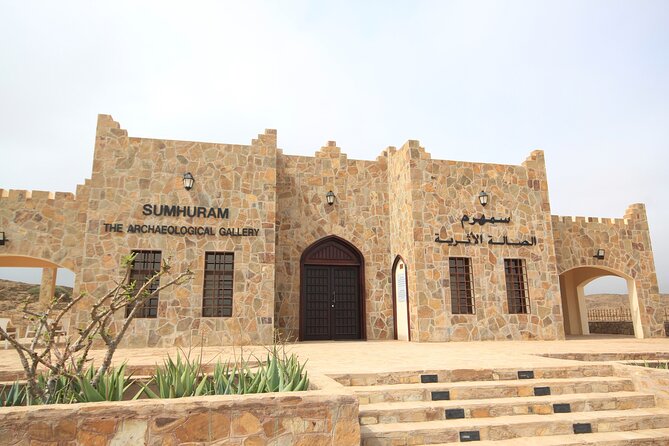
The final major stop is Sumhuram Old City, beside Khor Rori Creek. This ruined settlement was an important Arabian port connected with the frankincense trade, as well as copper trading. It now forms part of the UNESCO World Heritage Site called the Land of Frankincense.
That UNESCO designation gives the site more weight than a simple set of ruins. Sumhuram helps you understand why Dhofar mattered to long-distance trade. Frankincense from southern Arabia moved through ports and routes that connected the region with other parts of the ancient world.
The archaeological park and museum provide structure to the visit. You can see the remains, then use the museum to place them in context. The supplied details do not specify individual exhibits or the condition of particular buildings, so I would focus on the site’s position beside the creek and its role in trade.
The planned stop lasts about 45 minutes. That is enough for a focused visit, especially if your guide explains the main features as you walk. It may feel short if you want to read every panel or examine every ruin, but the compact timing makes sense in a four-hour circuit.
Sumhuram also has a separate entrance fee of about $8 per person. Since this is one of the tour’s central cultural stops, I would include that charge in your budget rather than treating it as an optional surprise.
The route works best with a good guide
A short tour like this depends heavily on the person in the front seat. The places are appealing on their own, but the connections between them make the day more rewarding. You want someone who can explain why Ain Razat matters as a water source, how Taqah fits Dhofar’s coastal story, and why Sumhuram mattered to frankincense trade.
Guide Said received especially strong praise for being extraordinary and for helping make a four-hour outing feel full. Another account described a guide who explained many details and helped create a very satisfying day. Those comments point to the tour’s strongest human feature: the guide can turn a sequence of stops into a coherent story.
Because the activity is private, you are not sharing the vehicle with other groups. That is helpful for couples, families, and small parties who want a more personal pace. It may also make the short schedule easier to manage, since you are not waiting for a large group to return to the vehicle.
Still, private does not mean flexible in every way. The total time remains about four hours, including transport. If your group wants long walks, extended photography, or a full meal, this route will feel brisk.
Timing, cost, and practical planning
The tour costs $113 per person and is often reserved around 18 days before the date. That booking pattern suggests you should avoid leaving it until the last minute if your Salalah schedule is fixed, especially during a popular season.
Pickup is offered, and the tour includes hotel transfer within the stated service area. A transfer from Mirbat hotels costs an additional $45 per person. Confirm your hotel location before paying, since that extra charge can change the value considerably.
The total duration is four hours from pickup to drop-off, not four hours at the sights. The scheduled visits add up to roughly three hours, leaving about an hour for driving and transfers. That is a useful way to set expectations.
Included:
- Bottled water
- Air-conditioned vehicle
- Private transportation
- All listed fees and taxes
Not included:
- Taqah Castle and Taqah Fort, about $11 per person
- Sumhuram entrance, about $8 per person
- Mirbat hotel transfer, about $45 per person
Most people can take part, according to the supplied information. No special accessibility details are provided, so ask the provider if you need specific help with walking surfaces, vehicle access, or the archaeological park.
Free cancellation is available up to 24 hours before the start time for a full refund. Changes or cancellations inside that window are not accepted for a refund. Since the tour requires good weather, the provider offers another date or a full refund if poor conditions force cancellation.
Who will get the most from this tour?
I would choose this outing if you have limited time in Salalah and want both natural sights and cultural context. It is a strong fit for first-time visitors who want a quick orientation to East Dhofar without arranging several separate trips.
It also suits couples, families, and small groups who value private transport. The air-conditioned vehicle matters in a warm climate, while the supplied water removes one small task from your morning.
The tour is less suitable if your main goal is a long visit to Wadi Darbat. The 45-minute stop gives you an introduction, not a full day in the wadi. The same applies if you want extended time at Sumhuram or a slow visit to Taqah’s buildings.
Season matters too. Khareef is the best period for dramatic waterfalls and greener surroundings at Wadi Darbat, while Ain Razat remains useful year-round because some water flows continuously. If you visit outside monsoon season, book this for the springs, river, ruins, and guide-led context rather than expecting the biggest waterfall display.
Should you book it?
Book this tour if you want an efficient, private introduction to East Dhofar and are happy to keep moving. The combination of Ain Razat, Wadi Darbat, Taqah, and UNESCO-listed Sumhuram gives you a lot of variety for one morning, and the strongest praise goes to the guides, especially Said, and to the beautiful scenery.
Skip it if you want a relaxed full-day outing, a long picnic, or hours of hiking at Wadi Darbat. Also add the separate Taqah and Sumhuram fees before judging the $113 price. For a compact first look at Salalah’s eastern side, though, the route offers solid value and a useful balance of water, wildlife, local culture, and ancient trade.
FAQ
How long does the East Dhofar tour last?
The full experience lasts about four hours, including hotel pickup, drop-off, transportation, and visits to the listed sights.
Which places are included on the tour?
The route visits Ain Razat, Wadi Darbat, Taqah, and Sumhuram Old City at Khor Rori.
Is hotel pickup available?
Yes. Pickup is offered, and private transportation in an air-conditioned vehicle is included. Transfers from Mirbat hotels cost an additional $45 per person.
Are entrance fees included?
Some fees are included, but Taqah Castle and Taqah Fort cost about $11 per person, and Sumhuram costs about $8 per person. These charges are listed separately from the tour price.
Is this a private tour?
Yes. Only your group participates in the activity.
What happens if bad weather cancels the tour?
If poor weather causes cancellation, you can choose a different date or receive a full refund. Free cancellation by you is available up to 24 hours before the start time.
Newest Salalah trips added here
- West of Salalah private tour – fascinating mountains and beaches★ 5.0 · 9 reviews
- Private tour – Empty Quarter desert adventure – Wadi Dawka + Ubar★ 5.0 · 5 reviews
- West Salalah Tour by VisitSalalah★ 5.0 · 6 reviews
- West Salalah Beaches and Blowholes★ 5.0 · 7 reviews
- Salalah by Night Tour – Charming Evening in the Garden City★ 5.0 · 2 reviews
- Where Sea Meets Rock: A Scenic Journey to West Salalah’s Shores★ 5.0 · 5 reviews
- Explore Samhan Mountain – Half-Day Getaway with Lunch Included.★ 5.0 · 10 reviews
- Salalah City Tour: Discover Salalahs Treasures with a Local Guide★ 5.0 · 4 reviews
Wadi Tours in Salalah, compared.
East Salalah Mountain Safari, Wadi Darbat, Beach, Camels, Dunes
Read our review →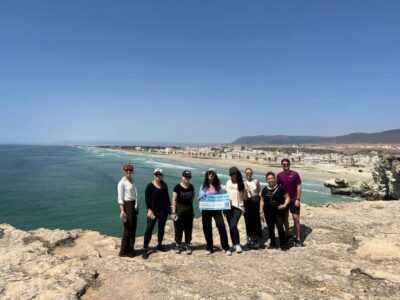
Wadi Darbat, Jabal Samhan, Baobab, Mirbat Sand Dune
Read our review →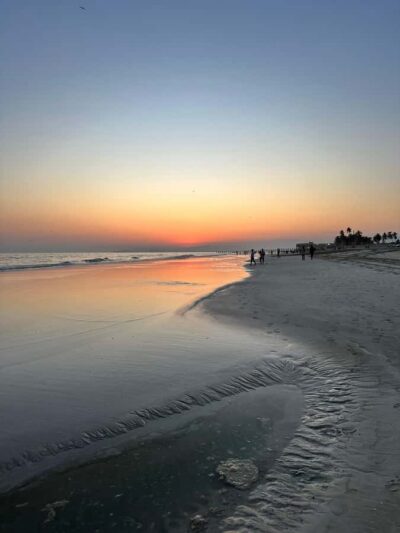
Half-Day Guided Tour to Wadi Darbat & Mount Samhan
Read our review →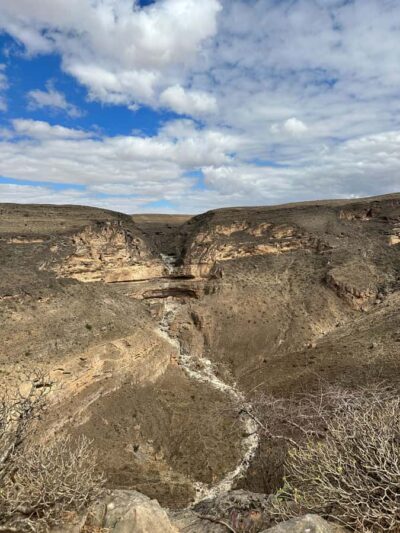
Wadi Derbat, Jabal Samhan, & Sinkhole Private Tour
Read our review →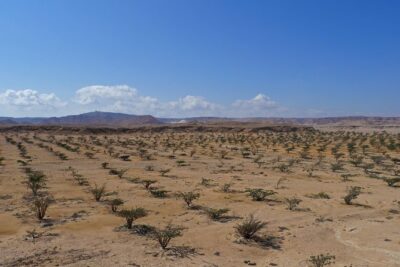
Private tour – Empty Quarter desert adventure – Wadi Dawka + Ubar
Read our review →
Browse the lists this tour appears in