
Reviewed · CITY TOURS IN SALALAH
Historical Salalah City Tour
Salalah smells of frankincense and coconuts. This half-day outing gives you a useful introduction to Dhofar through the Sultan Qaboos Mosque, Al Baleed’s UNESCO-listed archaeological site, the old frankincense souq, and local fruit markets. I like the mix of major sights and ordinary city life, and I like that an English-speaking local guide can explain Omani customs rather than simply point at buildings. The main concern is timing: one account describes only about two and a half hours of sightseeing, plus roughly an hour of hotel transfers, so the pace may feel brisk.
The strongest guide comments name Salem, Amin, and Rashid as friendly, well-informed hosts who answered questions and allowed time at the stops. The tour also includes a free coconut drink, a small but memorable touch. Still, the quality depends heavily on your guide, and the museum visit may feel too short if you want detailed archaeological context.
In This Review
- Key points to know before booking
- Why this Salalah tour makes sense in half a day
- Starting at Sultan Qaboos Mosque
- Sultan Qaboos Palace from the roadside
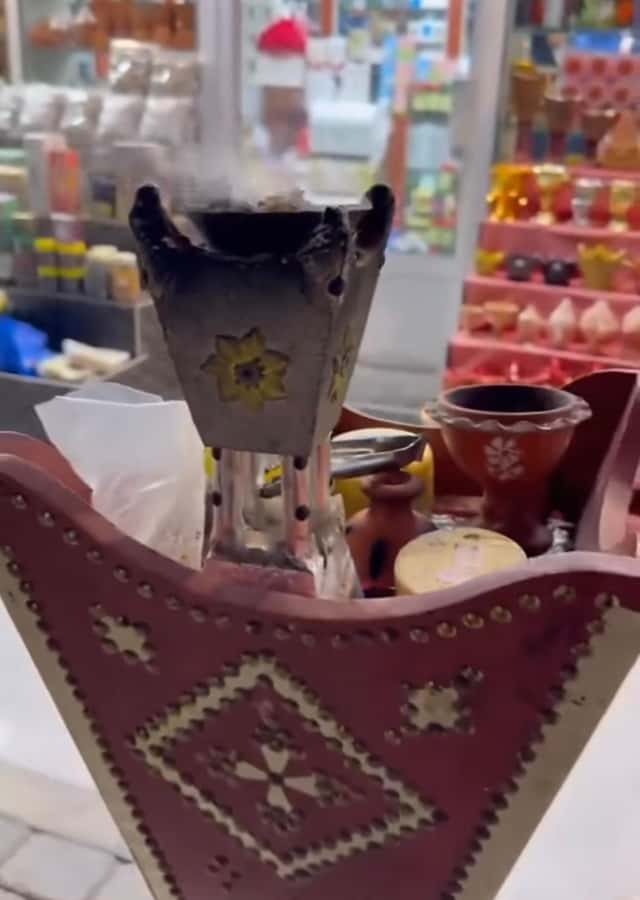
- Frankincense at Al Hosn Souq
- Al Baleed and the Museum of the Land of Frankincense
- Fruit plantations, coconut drinks, and local Salalah
- How the guide can shape the whole day
- Comfort, duration, and the $104 price
- Who should choose this itinerary
- Small practical choices that improve the visit
- FAQ
- How long is the Historical Salalah City Tour?
- What language is the tour conducted in?
- Is the Sultan Qaboos Mosque open every day?
- What should women wear to the mosque?
- Are shorts allowed on the mosque visit?
- Can I enter Sultan Qaboos Palace?
- Is a coconut drink included?
- What is the cancellation policy?
- Should you book this Salalah city tour?
Key points to know before booking
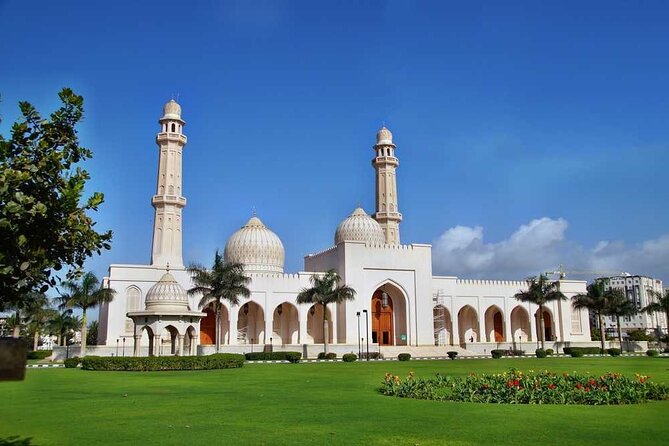
- Sultan Qaboos Mosque requires full coverage: Bring a scarf, long sleeves, and long pants. Shorts, short skirts, tight clothing, and see-through clothing are not allowed.
- Mosque hours limit the schedule: The mosque is open for this visit from Saturday to Thursday, 8:30 to 11:00, and closed on Fridays.
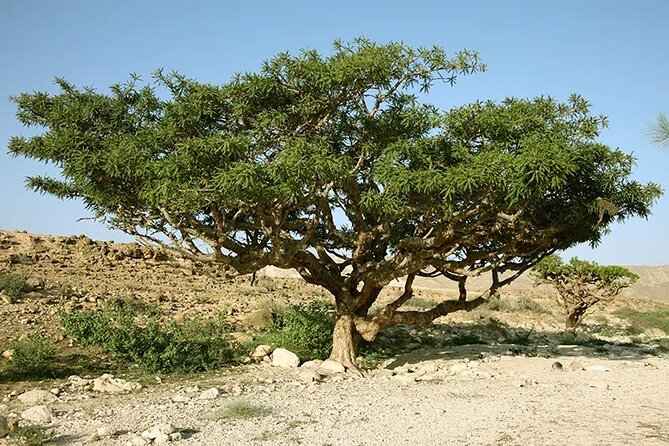
- Frankincense is the thread tying the tour together: You see it at Al Hosn Souq and learn about its wider importance at Al Baleed.
- The palace is an outside photo stop: You will pass Sultan Qaboos Palace and hear about its connection to the late Sultan, but you do not enter.
- Local food and drink are part of the appeal: Fruit plantations, coconut shops, and a free coconut drink add a taste of daily Salalah.
- The tour is best for first-time visitors: It covers many of the city’s main sights without requiring you to arrange several separate rides.
Why this Salalah tour makes sense in half a day
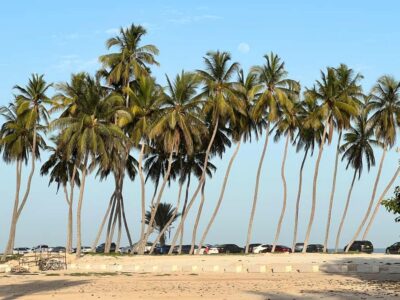
Salalah is more than a resort base in southern Oman. It is the main city of Dhofar, a region long linked to frankincense, sea trade, agriculture, and changing Omani rule. This tour works because it puts those themes into a single route.
You move from religion at the mosque to royal history at the palace, commerce at the souq, archaeology at Al Baleed, and farming around the fruit plantations. That gives you a better sense of the place than a drive past landmarks with no explanation.
The price is $104 per person. That is not a bargain if you want only transport and quick photographs. It makes more sense if you value a private or small-group style of visit, an English-speaking guide, newer vehicles with comfort features, and help understanding local traditions.
The supplied information does not give a fixed group size or exact pickup time. One detailed account had only two participants plus the driver, but you should not assume every departure will be that small. The same account described approximately 2.5 hours on the route and about one hour spent driving to and from the hotel.
More City Tours in Salalah
- Salalah City Tour: Discover the Best of Oman’s Coastal Gem
★ 4.8 · 58 reviews - Salalah City Tour with History, Culture, Souq Shopping, Halwa
★ 4.5 · 39 reviews - Ultimate Tour – Salalah city highlights
★ 5.0 · 22 reviews
Starting at Sultan Qaboos Mosque
The mosque is usually the first major stop, and it sets the tone for the day. Your guide explains local religious customs, the role of prayer, and what you are seeing inside. This is useful because the visit is not simply an architectural photo stop.
The opening window is important. Visits are available from Saturday through Thursday between 8:30 and 11:00, while Friday is closed. If your schedule does not fit those hours, confirm the route before booking or expect that the mosque portion may not be possible.
Dress carefully. Women need a scarf, long sleeves, and pants or another fully covering outfit. Men also need full coverage, and the stated rules exclude shorts. Tight and see-through clothing is not permitted.
I would dress for the mosque before leaving your hotel rather than trying to change in the vehicle. Bring a scarf even if you think your clothing is modest enough. Omani religious sites have clear standards, and following them shows respect while avoiding an awkward start to the morning.
The time inside may be shorter than you expect. One account describes an explanation of the mosque and prayer, followed by around 20 minutes of free time. That can be enough for a first look, but it is not a long architectural study.
Sultan Qaboos Palace from the roadside
The next royal stop is primarily for viewing and photographs. You see Sultan Qaboos Palace from outside, and the guide provides background on Sultan Qaboos, his successor, and the royal emblem.
The information supplied says Sultan Qaboos was born in 1940 at the palace. That detail gives the stop more meaning than a quick picture of a gated building. It connects Salalah to the modern history of Oman and to the ruler who shaped the country during a major period of change.
Keep your expectations realistic. This is not a palace tour, and you will not enter the grounds. The value comes from the explanation and the chance to place the building within Salalah’s civic history.
You may also pass Al Hosn Palace and Al Nahdhah Tower during the city drive. These drive-by views help you recognize the city, but they should not be treated as separate extended visits.
Frankincense at Al Hosn Souq
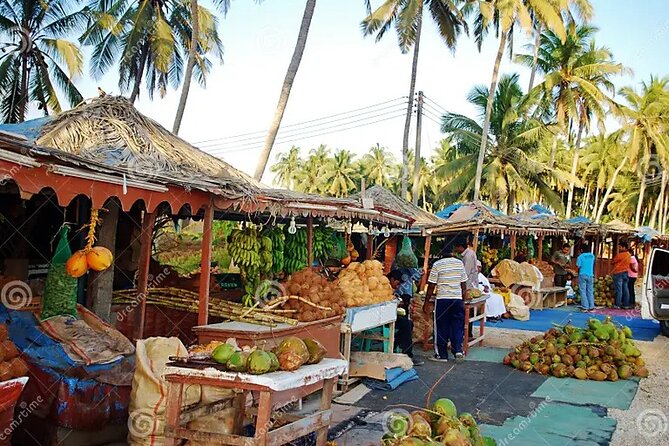
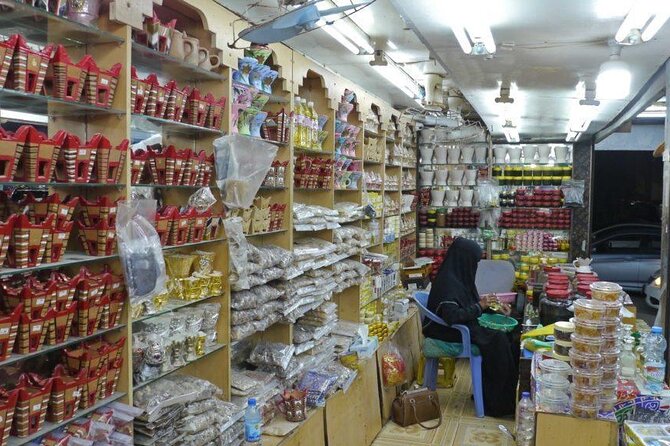
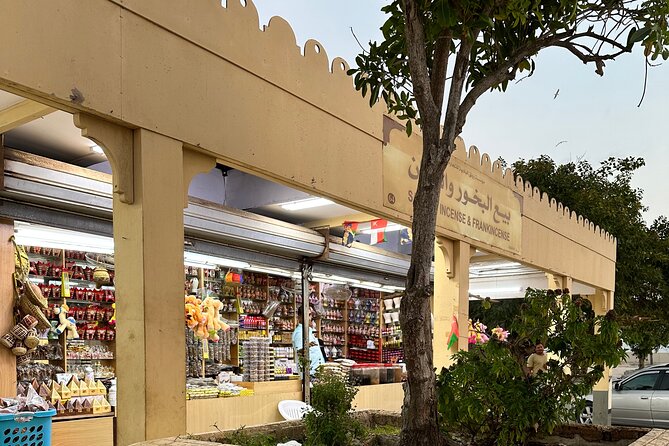
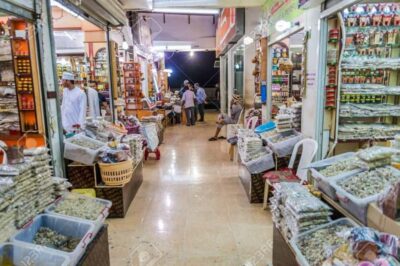
The old Al Hosn Souq, also called Haffa Souq in the tour details, is one of the most appealing stops. It is known for frankincense and local handmade gifts, and it gives you a direct look at a trade that has shaped Dhofar for centuries.
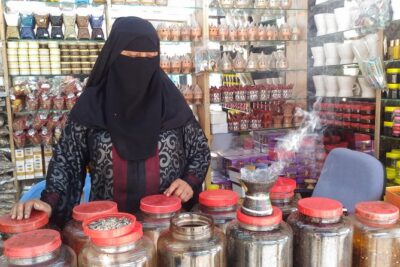
Frankincense is not just a souvenir here. It is part of the region’s identity and a practical link between present-day shopping and ancient commerce. Your guide can explain the different uses and local traditions surrounding it, while the stalls give you a chance to examine the resin, burners, and gift items at close range.
A tea stop is included in the souq portion. You also receive some free time, reported as about 15 to 20 minutes in one account. That is enough to browse, but you may need to focus if you want to compare products or ask many questions.
Shopping advice is simple: listen first, then buy. Use the guide to understand what you are looking at, and do not feel pressured to purchase a large gift set. The souq is worthwhile even if you leave with nothing.
The market is sometimes called the frankincense market and sometimes Haffa Souq in the tour details. If you are arranging a meeting point separately, use both names so there is no confusion.
A different way to spend the day out of Salalah:
- East Salalah Mountain Safari, Wadi Darbat, Beach, Camels, Dunes
★ 5.0 · 206 reviews - Mountain Safari Private Tour
★ 5.0 · 105 reviews - Sunset Desert Safari Salalah Tour in Rub Al Khali – Empty Quarter
★ 5.0 · 91 reviews - Salalah: Sunset Desert Safari – Rub Al Khali – Empty Quarter
★ 4.6 · 79 reviews
Al Baleed and the Museum of the Land of Frankincense
Al Baleed is the historical centerpiece of the outing. The archaeological site is part of the UNESCO-listed Land of Frankincense and gives you a stronger sense of Dhofar’s place in old trade networks.
The Museum of the Land of Frankincense adds context to the ruins. Your guide explains the development of Oman, the difference between older and modern Oman, and the part frankincense played in the region’s story.
This is where a guide can make a real difference. Museum displays can be useful but easy to skim. A good explanation helps you connect the objects and archaeological remains to Salalah, Dhofar, and the wider trade routes.
Do not expect a full museum seminar during a half-day tour. One detailed account says the guide allowed only a few minutes of free time before encouraging the return journey. If you enjoy reading every panel, studying objects, and walking slowly around an archaeological site, you may want to return independently.
On the other hand, the museum is a good fit if you want a clear introduction without spending half a day on one subject. The route gives you a foundation, and you can decide later if Al Baleed deserves a longer visit.
Fruit plantations, coconut drinks, and local Salalah
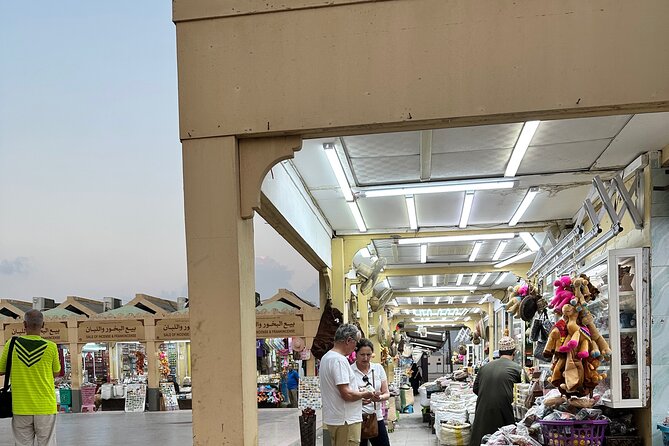
The final part shifts away from formal sights and toward the agricultural side of the city. You drive through fruit plantations and areas associated with Ain Razat, with stops or views connected to fruit shops and local produce.
Coconut is a special part of the experience. At the end, you receive a free coconut drink at the Salalah fruit market. It is a modest inclusion, but it gives the tour a welcome local flavor after the mosque, palace, and museum.
One account found the coconut stop disappointing because it took place at a very basic roadside stall with rubbish nearby. That is worth knowing. This is not a polished farm visit or a designed food attraction. It is a simple local stop, and its appeal depends on your interest in seeing everyday commerce rather than seeking a refined setting.
The fruit plantations also help explain why Salalah feels different from many parts of Oman. The tour details specifically mention coconut plantations, fruit shops, and Ain Razat. You may see more of this agricultural side from the vehicle than on foot, so treat the drive as part of the sightseeing.
How the guide can shape the whole day
The guide is the most important variable. Strong guide feedback highlights Salem, Amin, and Rashid for clear English, friendly service, careful explanations, and a willingness to answer questions.
Amin is described as being from Salalah himself, which is useful when you want local knowledge rather than a memorized script. Salem is praised for knowing the key places and allowing time at each stop. Rashid is praised for answering every question during a city tour.
The supplied experiences are not all equally positive. One account described the guide as punctual but gave a low score because explanations were brief, free time was limited, and the return seemed rushed. That person felt the tour delivered less guiding than expected for the price.
I would handle this by asking questions early. At the mosque, ask about prayer and local customs. At the souq, ask how frankincense is used. At Al Baleed, ask what the ruins tell you about trade. A responsive guide should welcome this, and your questions may turn a quick route into a much better lesson.
The tour is advertised with an experienced English-speaking guide. Since the quality can vary, confirm the guide’s name if the provider shares it, and state clearly that you want explanations at each stop rather than only transport.
Comfort, duration, and the $104 price
Newer vehicle models and comfort options are listed as part of the service. That matters in a half-day route with hotel transfers and several stops. A comfortable vehicle is especially useful if your hotel sits outside central Salalah or if the day is warm.
The exact duration deserves attention. It is described as a half-day tour, but one detailed account measured about 2.5 hours of touring plus around an hour for driving to and from the hotel. Pickup times, traffic, and the number of participants can change the total.
At $104 per person, I would book this for convenience and interpretation, not for the number of hours alone. The tour brings together transportation, an English-speaking guide, several entry points into Salalah’s culture, and a small local refreshment.
The price is harder to justify if the guide gives only short comments and urges you back to the vehicle. It is easier to justify when the guide explains the mosque, royal history, frankincense trade, archaeology, and local customs in a connected way.
The rating is 4.7 from 22 reviews, with several full-score accounts praising the itinerary and guides. That suggests the tour often works well, but the lower-rated experience is a useful warning: ask for a guide-led experience, not just a sightseeing transfer.
Cancellation is flexible enough for changing plans: you can cancel up to 24 hours ahead for a full refund, and you can reserve now and pay later. Those policies are useful if your Salalah schedule depends on weather, cruise timing, or hotel arrangements.
Who should choose this itinerary
I would recommend this tour to a first-time Salalah visitor who wants the main cultural stops in one organized morning. It suits you if you prefer explanations in English, want to see a mosque respectfully, and would rather not arrange separate taxis to Al Baleed, the souq, and the plantations.
It also suits travelers with limited time. If Salalah is one stop within a larger Oman trip, this route gives you a practical overview of the city and its strongest themes.
It may be less suitable if you want long museum visits, extensive shopping time, or a slow archaeological walk. You may also prefer independent touring if you already know the city and can arrange transport at a lower cost.
Families and older visitors may appreciate the vehicle comfort and organized route, though the supplied information does not specify accessibility features. If you need particular assistance, ask the provider before paying.
Small practical choices that improve the visit
- Wear your mosque clothing from the start, including long sleeves and long pants.
- Carry a scarf for women, even if one is not normally part of your packing.
- Keep your camera ready for the palace and Al Nahdhah Tower, but remember the palace is viewed from outside.
- Save questions for the souq and museum, where explanations add the most value.
- Allow extra time beyond the stated half-day if your hotel transfer is long.
- Do not judge the coconut stop by resort standards. Its point is the local drink and setting.
- If shopping for frankincense, ask about the products before making a purchase.
- Confirm the Friday closure of the mosque when planning your day.
FAQ
How long is the Historical Salalah City Tour?
It is described as a half-day tour. One detailed account reports about 2.5 hours of sightseeing plus approximately one hour for hotel travel.
What language is the tour conducted in?
The tour is conducted in English with an English-speaking local guide.
Is the Sultan Qaboos Mosque open every day?
No. The stated visiting hours are Saturday through Thursday, from 8:30 to 11:00. The mosque is closed on Fridays.
What should women wear to the mosque?
Women should bring a scarf and wear long sleeves and long pants. Full coverage is required.
Are shorts allowed on the mosque visit?
No. Shorts, short skirts, tight clothing, and see-through clothing are not allowed.
Can I enter Sultan Qaboos Palace?
No. The palace is viewed from outside as a photo stop.
Is a coconut drink included?
Yes. A free coconut drink is included at the Salalah fruit market.
What is the cancellation policy?
You can cancel up to 24 hours in advance for a full refund. The tour also allows you to reserve and pay later.
Should you book this Salalah city tour?
Book it if you want a guided first look at Salalah, especially the mosque, frankincense souq, Al Baleed Museum, palace, and agricultural side of the city. The best reason to choose it is the chance to have a local English-speaking guide connect those stops into one story.
Before booking, accept two limits: the tour is compact, and the experience depends on the guide. Ask for detailed explanations, wear the correct mosque clothing, and allow for transfer time. At $104, it is worthwhile when you want comfort, transport, and cultural context in one package. If you mainly want long visits and independent wandering, spend the money on transport and give each sight more time on your own.
More History and Heritage Stops in Salalah
- East Salalah Highlights: Half-Day Heritage & Scenic Countryside
★ 5.0 · 13 reviews - Historical Salalah City Tour
★ 5.0 · 4 reviews - East of Salalah – natural beauty and historical heritage
★ 4.5 · 2 reviews - From Muscat: Nizwa and Oman’s Historical Gems Tour
★ 4.7 · 403 reviews
Newest Salalah trips added here
- West of Salalah private tour – fascinating mountains and beaches★ 5.0 · 9 reviews
- Private tour – Empty Quarter desert adventure – Wadi Dawka + Ubar★ 5.0 · 5 reviews
- West Salalah Tour by VisitSalalah★ 5.0 · 6 reviews
- West Salalah Beaches and Blowholes★ 5.0 · 7 reviews
- Salalah by Night Tour – Charming Evening in the Garden City★ 5.0 · 2 reviews
- Where Sea Meets Rock: A Scenic Journey to West Salalah’s Shores★ 5.0 · 5 reviews
- Explore Samhan Mountain – Half-Day Getaway with Lunch Included.★ 5.0 · 10 reviews
- Salalah City Tour: Discover Salalahs Treasures with a Local Guide★ 5.0 · 4 reviews
City Tours in Salalah, compared.
Salalah City Tour: Discover the Best of Oman’s Coastal Gem
Read our review →
Salalah City Tour with History, Culture, Souq Shopping, Halwa
Read our review →
Historical Salalah City Tour with Culture, Food & Shopping
Read our review →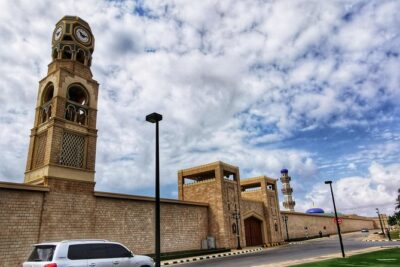
Salalah City and East Tour Combo (Darbat falls, Razat spring)
Read our review →
Salalah City private tour – all-inclusive sightseeing tour
Read our review →Browse the lists this tour appears in