
Reviewed · DESERT SAFARIS IN SALALAH
Sunset desert safari Salalah with Dinner in a Bedouins camp
The desert saves its best light for last. This eight-hour private trip links Salalah with frankincense trees, Thumrait, the ancient site of Ubar, and the Empty Quarter before ending with dinner at a Bedouin camp. I like the strong mix of nature and culture, and I like that Omani tea, coffee, snacks, and an English or Italian-speaking guide are included.
The main consideration is the pace. Four stops are planned at about two hours each, so the day covers a lot of ground and the desert section may feel more focused on scenery than on long archaeological exploration. You also need to pay 3 OMR per person to enter Ubar.
In This Review
- Key points to know before you book
- Why this Salalah desert safari is different
- Wadi Dawkah and Dhofar’s frankincense trees
- Thumrait, a useful stop on the northern road
- Ubar, the archaeological heart of the trip
- The Empty Quarter at sunset
- Dinner at a Bedouin camp
- The guide and private format
- Who gets the best value from the $150 price
- What to bring and how to plan the day
- Is this Salalah desert safari worth booking?
- FAQ
- How long does the sunset desert safari from Salalah last?
- Is pickup available?
- Is the Ubar entrance fee included?
- What food and drinks are included?
- What languages does the guide speak?
- Is this a private tour?
Key points to know before you book
- Frankincense trees at Wadi Dawkah: See one of Dhofar’s most important natural and cultural sites, with thousands of trees spread across a stony valley.
- A long northern route from Salalah: The journey reaches Thumrait, around 100 kilometers from Salalah, then continues toward Ubar and the Empty Quarter.
- Ubar costs extra: Entry to the Lost City of Ubar is not included and costs 3 OMR per person.
- Sunset and dinner finish: The day is built around desert views, evening light, and a meal at a Bedouin camp.
- Private touring: Only your group participates, which makes the long drive easier to manage at your own pace.
- Warm guiding matters: Mohammed is praised for being friendly, organized, and informative, while the tour also offers English and Italian support.
Why this Salalah desert safari is different
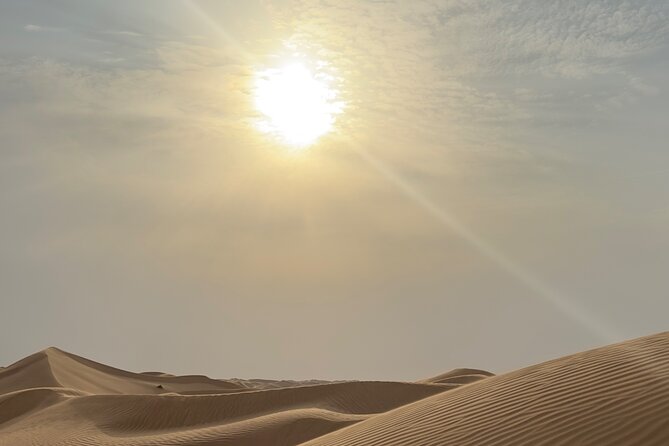
Many desert outings from Salalah focus on dunes alone. This one gives you a fuller picture of Dhofar, beginning with the frankincense trade and ending in the open sands of the Empty Quarter.
That shape gives the day a clear story. You see where frankincense trees grow, pass through an important regional town, visit the remains of an old trading center, and then reach one of the world’s great deserts. The Bedouin camp and dinner provide a natural finish rather than simply sending you back to Salalah after sunset.
The tour starts at 1:00 pm and lasts about eight hours. That is a substantial outing, so I would treat it as a full afternoon and evening rather than a quick excursion. The private format is especially useful here. Four stops, long distances, and a late meal can be tiring in a large shared vehicle, but a private group has more room to manage pauses and questions.
The price is $150 per person. That is not a low-cost half-day trip, but the value depends on what you want from Salalah. You are paying for a long route, private touring, a guide, included drinks and snacks, and dinner at the camp. Ubar admission is the one stated extra cost, at 3 OMR per person.
More Desert Safaris in Salalah
- East Salalah Mountain Safari, Wadi Darbat, Beach, Camels, Dunes
★ 5.0 · 206 reviews - Sunset Desert Safari Salalah Tour in Rub Al Khali – Empty Quarter
★ 5.0 · 91 reviews - Salalah: Sunset Desert Safari – Rub Al Khali – Empty Quarter
★ 4.6 · 79 reviews
Wadi Dawkah and Dhofar’s frankincense trees
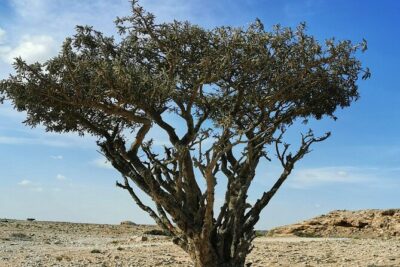
Your first major stop is Wadi Dawkah, about 40 kilometers north of Salalah. This is a stony, semi-desert valley filled with frankincense trees, and it is protected as part of a UNESCO World Heritage Site.
The setting is quiet and spare. Do not expect a lush oasis in the usual sense. The appeal comes from the contrast between the dry valley and the unusual trees that have supported Dhofar’s trade and culture for centuries.
You can walk among the trees and learn how frankincense sap is collected. The traditional process gives the stop its real meaning. These are not simply attractive trees placed in a scenic park. Their resin helped connect southern Oman with far-off markets and ancient trading routes.
The two-hour allocation allows time to look closely rather than rush through a roadside photo stop. I would use this part of the tour to ask your guide about harvesting, the age of the trees, and the role of frankincense in Oman. A good explanation can turn a quiet grove into one of the day’s most memorable stops.
Wadi Dawkah also sets the tone for the rest of the journey. You begin with a plant that shaped Dhofar’s economy, then follow that old trade story toward the desert interior. If you prefer natural sites and cultural context to a packed list of attractions, this is a strong opening.
Thumrait, a useful stop on the northern road
The route continues to Thumrait, around 100 kilometers north of Salalah. It is a commercial and agricultural center in Dhofar, with livestock trading, farming, industry, and a local souk.
This stop is less dramatic than the dunes or Ubar. That is not a flaw, but it is worth setting expectations. Thumrait is a working town, not a polished attraction designed only for sightseeing.
Its value is practical and human. You get a sense of the region beyond Salalah’s coastal setting and see how communities function along the route into Oman’s interior. Dates, mangoes, and pomegranates are among the crops associated with the surrounding plains, while the souk offers produce, handicrafts, and traditional textiles.
A two-hour stop here may suit you if you enjoy ordinary local places and want more than desert scenery. If your priority is dramatic views at every stage, this may feel like the least exciting part of the day.
The private arrangement helps. You can use the time to ask questions about farming, livestock, and local trade instead of treating Thumrait as a simple fuel or photo break. Since the tour includes an English and Italian-speaking guide, language support should be useful when discussing those details.
Ubar, the archaeological heart of the trip
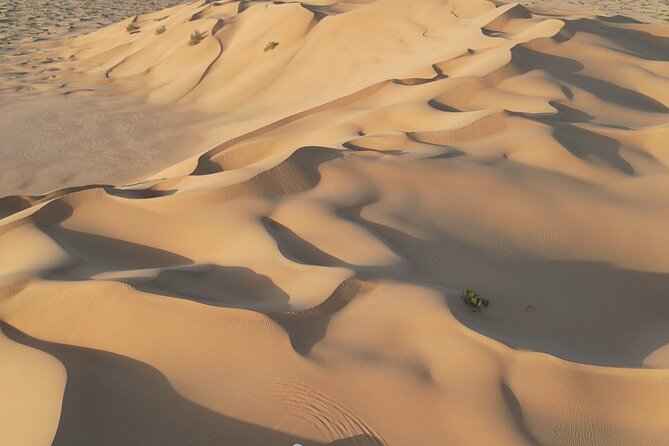
The road then reaches Ubar, often called the Atlantis of the Sands. The site is linked to the old frankincense trade and is known for remains that include ancient structures, fortifications, and underground irrigation channels.
Ubar gives the safari more weight than a standard dune drive. The ruins point to a settlement that once benefited from trade across southern Arabia. Its decline remains uncertain, with natural disaster and social upheaval among the suggested explanations.
You should allow time here for the guide’s explanation. Ruins in a remote desert can be difficult to read on your own, especially when walls and foundations have been worn by time. The story of Ubar helps you connect the archaeological remains with the frankincense route seen earlier at Wadi Dawkah.
Admission is not included. Budget 3 OMR per person for entry. This is a small extra beside the tour price, but it is the kind of detail you want to know before leaving Salalah.
The two-hour allocation sounds generous for a site in such a remote setting. It gives you time to see the remains without turning the stop into a hurried walk. Still, Ubar is not a complete ancient city waiting behind intact walls. You are visiting an archaeological site in an austere setting, so its impact depends partly on your interest in history and the quality of the explanation.
A different way to spend the day out of Salalah:
- Mountain Safari Private Tour
★ 5.0 · 105 reviews - West Salalah Tour – Caribbean of Orient – Fazayah Beach with City
★ 5.0 · 74 reviews - Salalah City Tour: Discover the Best of Oman’s Coastal Gem
★ 4.8 · 58 reviews - Sunset desert safari tour in Salalah(private tour)
★ 5.0 · 58 reviews
The Empty Quarter at sunset
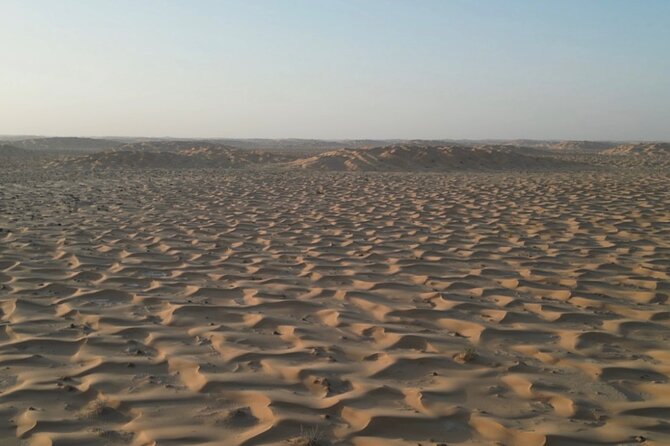
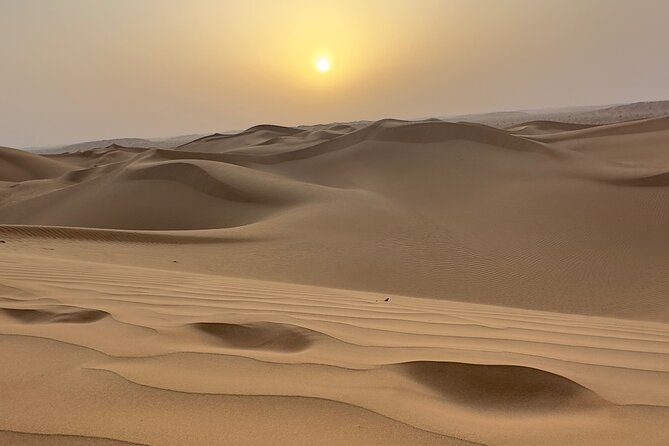
The final major setting is the Empty Quarter, or Rub’ al-Khali, the largest continuous sand desert in the world. Oman shares this enormous desert with Saudi Arabia, Yemen, and the United Arab Emirates.
Here the scenery changes sharply. The stony valley and archaeological remains give way to broad sand dunes and open space. Some dunes in the Empty Quarter rise more than 300 meters, creating the grand scale that makes this part of the trip so memorable.
The timing matters. Starting at 1:00 pm allows the route to reach the desert later in the day, when the light becomes softer and the heat may be less severe than at midday. The exact sunset time changes through the year, so the schedule should be treated as an evening desert visit rather than a guarantee of a specific minute at the best viewpoint.
I like this part of the tour because it gives you time to stop looking at individual attractions. The Empty Quarter is about distance, silence, and changing color across the dunes. It is a place where the setting itself does most of the work.
You may also find this section physically tiring. The tour runs for about eight hours, and the Empty Quarter is a harsh environment with scarce rainfall and extreme temperatures. Bring water and protect yourself from the sun, even though local tea, coffee, and snacks are supplied.
The desert is not empty in the literal sense. Adapted wildlife includes sand gazelles, Arabian oryx, and reptiles, although the tour information does not promise sightings. Enjoy the scale first, and consider wildlife a bonus rather than part of the scheduled program.
Dinner at a Bedouin camp
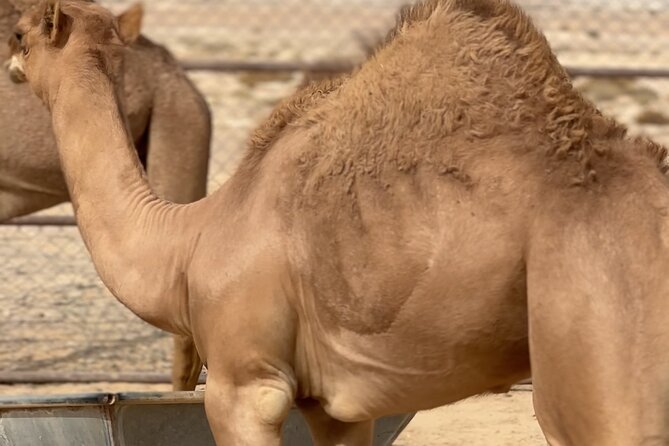
The day ends with dinner at a Bedouin camp. This is more than a convenient meal after a long drive. It gives you a simple cultural setting in which to slow down, eat, and enjoy the desert after dark.
The meal is included in the experience, and the supplied Omani tea, coffee, and snacks add local flavor during the day. One especially positive detail is the praise for the food at the camp. That matters after several hours on the road, when a generous dinner can make the final part of the trip feel rewarding rather than merely late.
Do not expect a restaurant-style evening. The attraction is the camp setting and the connection to the desert, not formal service or a long menu. The experience will suit you best if you enjoy straightforward food and a traditional atmosphere.
The camp also gives the itinerary a better ending. You move from frankincense trees and ruins to huge dunes, then finish with food and conversation. That progression feels more satisfying than a trip built around one quick stop and a photo opportunity.
The guide and private format
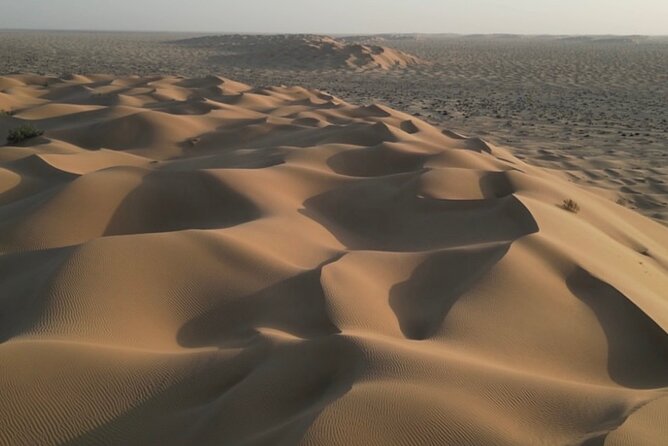
The guide can make a major difference on a route like this. Mohammed is specifically praised for being friendly, organized, and informative. Those qualities are useful here because the tour includes several long stretches of road and places that benefit from explanation.
An English and Italian-speaking guide is included. If you care about the historical side of Wadi Dawkah and Ubar, ask questions as you go. The value of a guide is not only navigation. It is the ability to connect a tree, a trade route, a ruined settlement, and a desert into one understandable story.
This is a private activity, so only your group takes part. That is one of the strongest practical advantages. You do not need to adapt to strangers, and the guide can focus on your interests. Families, couples, and small groups who want a quieter day should consider this format carefully.
The private setup does not remove the realities of the route. You still spend much of the day traveling between Salalah and the northern sites. If you dislike long drives, the distance may outweigh the appeal of the Empty Quarter.
Who gets the best value from the $150 price
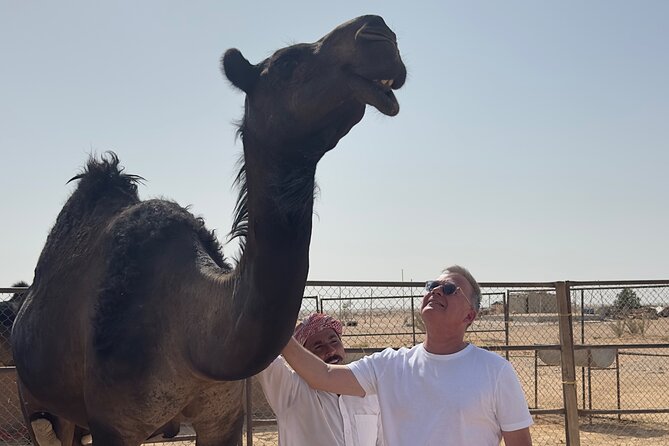
I see the price as reasonable for the right kind of visitor. You are getting roughly eight hours, private transport arrangements with pickup offered, a guide, drinks, snacks, and dinner. The route also reaches places that are far beyond Salalah’s immediate center.
The strongest value comes if you want several experiences in one day:
- A frankincense grove
- A local town and souk setting
- An archaeological site
- The Empty Quarter
- Sunset and dinner at a desert camp
The price is harder to justify if you want only a short dune ride or a simple sunset outing. In that case, a more focused desert activity may better match your plans.
Also remember the 3 OMR Ubar admission fee. It is modest, but add it to the total when comparing options. The tour is booked an average of nine days ahead, which suggests you should not leave it until the last minute if your Salalah schedule is fixed.
What to bring and how to plan the day
Wear comfortable clothing for a long afternoon and evening outside. Light layers are useful because temperatures can change after sunset, and practical shoes will help at the wadi and archaeological site.
Carry water, sun protection, and any personal medication you need. Tea, coffee, and snacks are provided, but those do not replace your own water supply during a full-day desert route.
Keep your schedule open from the 1:00 pm start until the evening return. The listed duration is approximate, and the route covers major distances. Avoid booking another fixed evening activity that depends on arriving back at an exact time.
The tour offers mobile tickets and pickup. Confirmation is received at booking, and the meeting details should be checked carefully before departure. Most people can participate, but the tour is still a long outing across remote desert areas, so comfort with heat, travel time, and uneven ground matters.
Is this Salalah desert safari worth booking?
I would book this tour if you want the Empty Quarter but also care about why Dhofar matters. Wadi Dawkah gives you the frankincense connection, Ubar adds archaeology, and the sunset camp provides the emotional finish. Mohammed’s friendly, organized guiding is another reason to feel confident about the experience.
I would think twice if you want a short, activity-heavy desert trip or if you have limited tolerance for long drives. Thumrait may feel ordinary, Ubar requires an extra fee, and the eight-hour schedule is demanding.
For couples, families, and private groups who want a broad introduction to northern Dhofar, this is a strong choice. It offers more than dunes, and the combination of ancient trade, local life, desert scenery, and dinner gives your day in Salalah a clear sense of place.
FAQ
How long does the sunset desert safari from Salalah last?
The experience lasts approximately eight hours, beginning at 1:00 pm.
Is pickup available?
Yes. Pickup is offered, and the tour provides a meeting point for the 1:00 pm start.
Is the Ubar entrance fee included?
No. Admission to the Lost City of Ubar costs 3 OMR per person and is paid separately.
What food and drinks are included?
The tour includes dinner at a Bedouin camp, along with Omani tea, coffee, and snacks during the experience.
What languages does the guide speak?
An English and Italian-speaking guide is included. Mohammed is identified as one of the guides associated with the experience.
Is this a private tour?
Yes. Only your group participates in the activity.
More Places to Eat on a Tour in Salalah
- Traditional Omani Dinner in Muscat Desert Sands
★ 5.0 · 15 reviews - Private Sunset Watching Desert Safari with Dinner
★ 5.0 · 10 reviews - Muscat: Wahiba Sands Desert Sunset Tour with Dinner
★ 3.4 · 10 reviews - Muscat: Evening Group City Guided Tour with Free Dinner
★ 4.5 · 9 reviews
More Dinner Outings in Salalah
- Muscat: Group City Tour with Pickup and Lunch or Dinner
★ 4.3 · 89 reviews - Dubai: Desert Safari with BBQ Dinner
★ 4.6 · 30 reviews - Oman:Group Muscat City Tour With Pick Up & Free Lunch/Dinner
★ 4.6 · 19 reviews - Authentic Omani Home Dining
★ 5.0 · 19 reviews
Newest Salalah trips added here
- West of Salalah private tour – fascinating mountains and beaches★ 5.0 · 9 reviews
- Private tour – Empty Quarter desert adventure – Wadi Dawka + Ubar★ 5.0 · 5 reviews
- West Salalah Tour by VisitSalalah★ 5.0 · 6 reviews
- West Salalah Beaches and Blowholes★ 5.0 · 7 reviews
- Salalah by Night Tour – Charming Evening in the Garden City★ 5.0 · 2 reviews
- Where Sea Meets Rock: A Scenic Journey to West Salalah’s Shores★ 5.0 · 5 reviews
- Explore Samhan Mountain – Half-Day Getaway with Lunch Included.★ 5.0 · 10 reviews
- Salalah City Tour: Discover Salalahs Treasures with a Local Guide★ 5.0 · 4 reviews
Desert Safaris in Salalah, compared.
East Salalah Mountain Safari, Wadi Darbat, Beach, Camels, Dunes
Read our review →
Wadi Darbat, Jabal Samhan, Baobab, Mirbat Sand Dune
Read our review →
Sunset Desert Safari Salalah Tour in Rub Al Khali – Empty Quarter
Read our review →
Sunset Desert Safari – Rub Al Khali – Empty Quarter
Read our review →
Sunset desert safari tour in Salalah(private tour)
Read our review →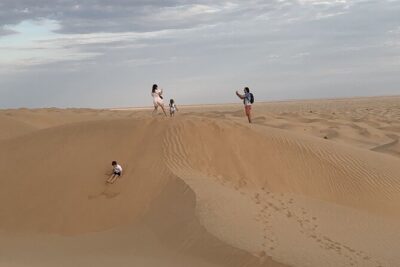
Desert Safari, Sunset & Sand Bashing (Rub Al Khali Desert)
Read our review →
Magical Night Stay in Rub Al Khali Empty Quarter Desert Salalah
Read our review →Browse the lists this tour appears in